The best reply in your inbox is an out-of-office
Estimated reading time: 5 minutes
Sales.co classified 61,770 real replies from more than two million cold emails. 45.1% were auto-replies: out-of-office notes, "I'm traveling," departure notices. That's three times the positive replies (14.1%) and half again the negatives (29.9%). The single biggest thing a cold campaign produces is mail nobody wrote by hand.
The standard advice for that mail fits in one word: filter. Pause the sequence, keep it out of your reply-rate math, move on to the humans.
The filter is half right.
What the filter throws away
The bookkeeping half is correct. An auto-reply shouldn't count in reply metrics, and no rep should be pausing sequences by hand. Automate all of it.
The content is another matter. An out-of-office is the only reply where information arrives that nobody decided to give you. A negative reply is a person choosing their words carefully. An OOO is the company talking in its sleep: a backup contact, a return date, sometimes the news that your prospect changed jobs three weeks ago.
Everything else in outbound is priced in effort. Gong's analysis of 28 million cold emails puts the average at 344 sends for one booked meeting. The auto-reply bucket hands you names and dates at zero additional sends, and most teams route it somewhere no human will ever look.
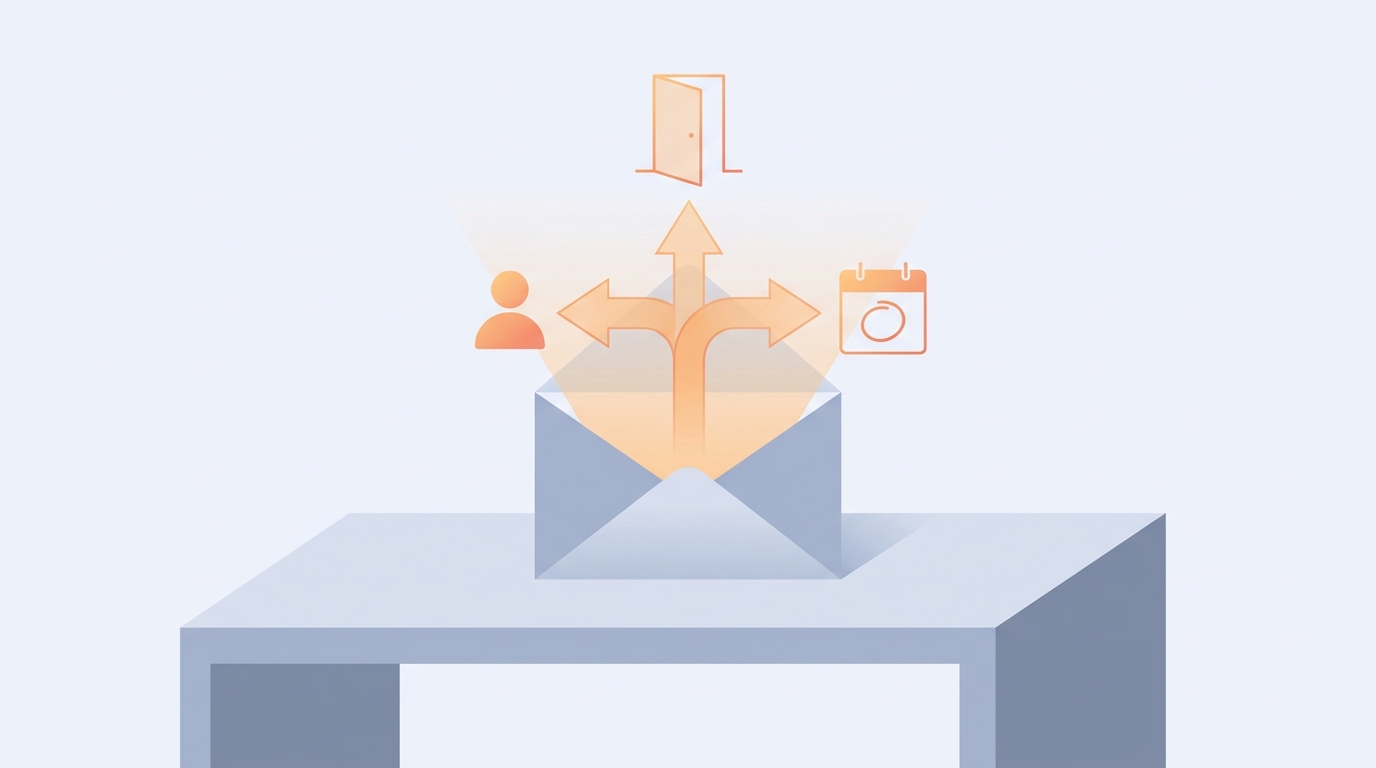
Three things are sitting in that bucket. This post stays inside it; the other twelve reply types, from "not interested" to "who is this?", each get a play in the negative-reply playbook.
A named backup contact is a second door
Plenty of OOOs name a colleague: "For urgent matters, contact Priya." Most reps read straight past the name. It's the cheapest multi-threading in outbound.
Why does a second contact matter that much? Gong's army-of-champions study (10 million conversations, 500,000 emails) found winning deals average 8 buyer-side email contacts. Losing deals average 3. A deal with one thread dies the day that one person goes quiet.
So write to the named colleague now rather than waiting out the vacation:
Hi [Name], I was reaching out to [prospect] about [topic] and their out-of-office pointed your way. Rather than sit on it until [return date]: are you the right person on [area], or should it wait for [prospect]?
Two things in that note earn the reply. You said how you got the name, so it reads as routing rather than going over anyone's head. And the question invites a no, which costs them nothing to type and still tells you who owns the problem.
A departure notice is two leads
"I no longer work at Acme, please direct inquiries to..." looks like a dead end. It's two live leads in one email.
Lead one is whoever inherited the remit. A new owner reopens old decisions, and the window is short: UserGems (vendor-published, treat it as directional) puts a new budget-holder's spending at 70% of their budget in the first 100 days, with the new-hire trigger going stale after 30 to 90 days.
Hi [Name], saw you've picked up [departed]'s remit at [company]. A new seat usually means a fresh look at [problem area]; worth a quick compare-notes on how [peers] are handling it?
Lead two is the person who left. Champify tracked 230,000 job changes by former champions across 7,000 opportunities (its own customer base, so directional): outreach triggered by a job change converted activity to opportunity at 12%, against under 2% for cold outbound.
How hard you chase depends on what they were on the old deal. Former buying-committee members won at 49%, against a rough SaaS average of 19%. Customer-success contacts won at 44%. People who merely used the product, 33%. A departed decision-maker deserves more follow-through than most positive replies; a departed user gets one note.
Congrats on the move to [NewCo]. We'd started a conversation at [OldCo] about [problem]; if it's on your plate in the new role, happy to pick it back up.
Almost nobody works this. Champify's own numbers: CRMs miss 78% of former champions' moves, and only about half of the ones identified get worked at all. The OOO sitting in your inbox is the one job-change alert that needs no tooling. It emailed you.
The return date is a follow-up scheduling handle
The humblest asset is the date. "Back August 4th" tells you which morning your prospect will be triaging a stuffed inbox and deciding, fast, what deserves an answer. Resume the sequence on that date instead of a blind day-7 timer and your follow-up sits near the top of the pile.
This one is pure automation. Any decent sequencer can key the resume to the stated date. No judgment required, so no human required.
Machines file, humans mine
The operating model splits cleanly. Automation owns the bookkeeping (pause, resume on the stated date, exclude from metrics). A human owns the mining: one pass a day through the auto-reply queue, departure notices first because they decay fastest, then named backups. Most days that pass takes minutes.
That split is how we built reply classification into Emitree. The unambiguous buckets, OOO and unsubscribes, run on autopilot; anything ambiguous becomes a draft a human approves. Filing is mechanical. Mining is judgment, and judgment stays human.
One boundary: the emergency mobile number some OOOs include is for emergencies. Using it to jump the queue tells the account who you are, before you've said a word.
There's also a compounding effect the raw numbers miss. Every name the queue produces lands on an account you already researched: the context, the angle, the qualification are sunk costs from the first send. A new lead from a list makes you pay for that research again. A new lead from an OOO inherits it.
Your next campaign will produce more auto-replies than human replies; the benchmark says nearly half of everything that comes back. Somewhere in that pile is a name nobody else in your market is working, because everyone runs the same filter you do. Read the bucket before you file it.
Sources
- Sales.co - Cold Email Statistics. Classification of 61,770 real replies: 45.1% auto-reply/OOO, 29.9% negative, 14.1% positive.
- Gong - Army of Champions. Winning deals average 8 buyer email contacts vs 3 in losing deals.
- Champify - The Impact of Tracking Job Changes. 12% vs under 2% activity-to-opportunity conversion; win rates by former deal role; the 78% CRM coverage miss.
- UserGems - New Hire Sales Trigger. The 30-90 day trigger window and 70%-of-budget-in-100-days figure.
- Gong - Does Cold Email Even Work Anymore?. 344 cold emails per booked meeting, from 28M+ emails.