Updated August 24, 2026
Quantonica vs Regie AI (2026): Why Horizontal Signals Fail Specialized Sellers
Regie AI monitors 100+ buying signals and 220M+ contacts. But none of those signals tell you who just retired carbon credits or which training school is hiring aggressively. That gap is where deals die.
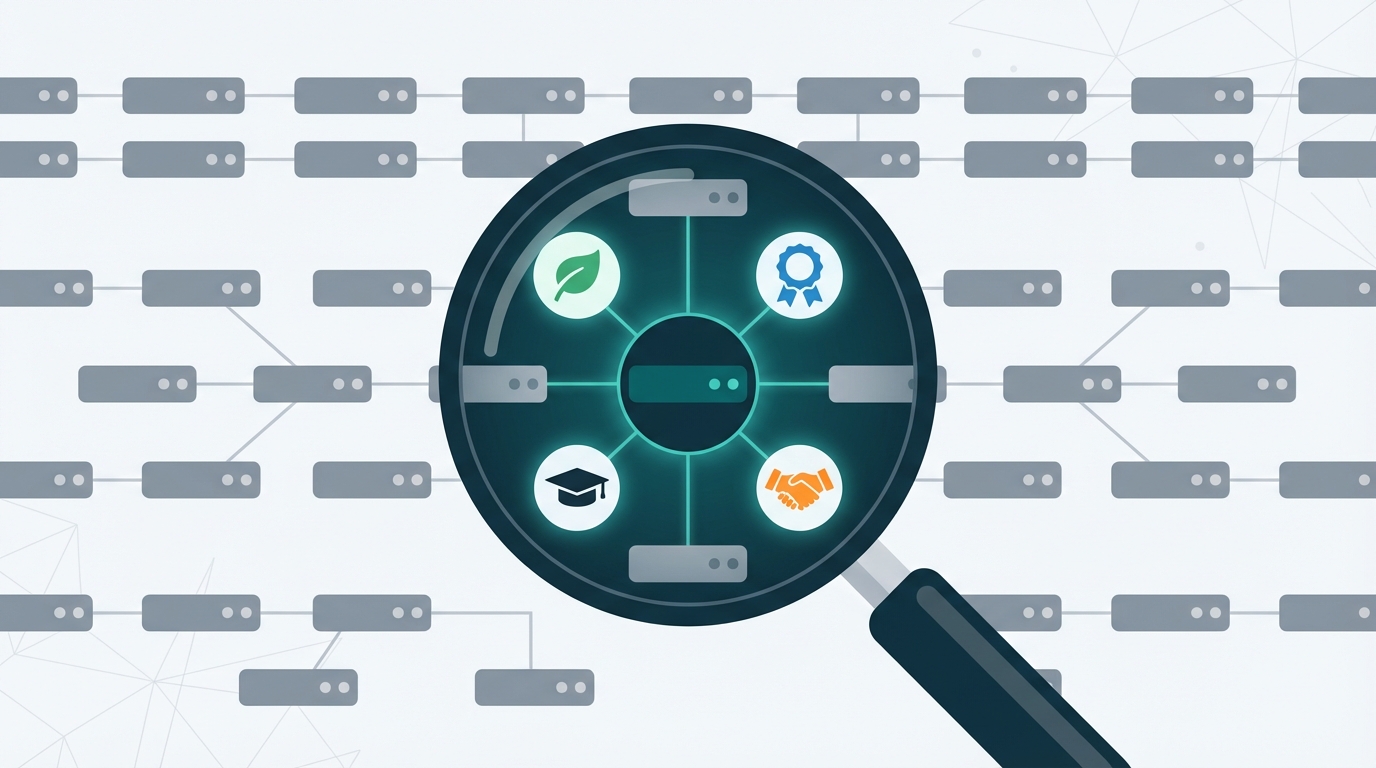
Regie AI raised $65.6M to build what they call "the world's only AI SEP." They monitor over 100 buying signals, 220 million contacts, and Auto-Pilot agents that prospect around the clock without human intervention. Their $30M Series B closed in 2025. Their customer case studies are real.
And they still can't tell a carbon credit seller which companies just retired credits and might need to replenish. They can't identify which training school is aggressively placing graduates into a specific sector. They can't catch a wealth management prospect who just triggered a liquidity event.
More signals don't fix that. It's a structural problem with how Regie AI is built, and it's the same problem with every horizontal AI sales tool on the market.
What Regie AI promises (and what users actually report)
Regie's pitch is compelling on paper. An AI-native sales engagement platform that removes the grunt work from outbound: find prospects, enrich their profiles, write personalized messages, execute across email, phone, and LinkedIn, then hand off to a human rep when there's buying intent.
Their case studies back it up at the top line. One B2B SaaS customer got 24% pipeline growth and maintained headcount targets with 25% fewer SDRs. Smartling generated over $1M in pipeline, with 72% of emails personalized in under a minute each. Auto-Pilot reportedly contributed to 40%+ of SDR-driven meetings for some accounts.
For a generic B2B SaaS company selling to IT buyers? That probably works.
Here's what G2, Capterra, and TrustRadius users consistently say when you dig past the case studies:
| Area | Regie's claim | Documented user experience |
|---|---|---|
| Content quality | AI-personalized, compelling messages | "Robotic and salesy"; heavy editing required before sending |
| Speed | 15-20 minutes of manual research cut to 2-3 | True, but output often needs significant rework |
| Personalization | 1:1 prospect personalization at scale | Generic variables, not contextual signals |
| Pricing | Competitive enterprise value | $180/user/mo with a 10-seat minimum (about $21.6K/yr floor, verified June 2026); typical spend $35K+/yr with add-ons; no free trial |
| Integrations | Seamless CRM and SEP sync | Reported bugs with Outreach and Salesloft connectors |
| Industry fit | Works across all markets | "Doesn't translate well for specialized industries" |
MarketBetter's reviewer gave Regie a 6.5/10, calling it "strong for large enterprise teams with high-volume outbound strategies where speed matters more than message authenticity." That's a diplomatic way of saying: if you're a niche seller, don't bother.
The learning curve problem is real too. Multiple reviewers describe spending weeks experimenting with prompt configurations before the AI output is usable. One user: "There are so many options and messaging to pick through when creating sequences that it can take too long to sift through." That's before you've sent a single email.
At a committed five-figure annual spend, users shouldn't be doing AI prompt engineering to get basic outreach.
Why generic signals fail in specialized markets
Regie's 100+ monitored signals are impressive in list form. They pull from Google, LinkedIn, 10-K filings, G2, Crunchbase, BuiltWith, company news, and call transcripts.
Every single one of those is a generic B2B signal.
If your buyer is a sustainability director evaluating carbon credit vendors, none of those signals tell you anything that matters. What actually tells you they're a buyer: credit retirements on the Verra Registry, Gold Standard transactions, their CDP disclosure score, whether they've made a Science Based Targets commitment and when it's due. These signals don't live in LinkedIn or Crunchbase. They're in domain-specific databases most sales teams have never heard of.
Same pattern in student placement. A training school trying to place graduates needs to find hiring managers, not job postings. The actual decision-maker is often unlisted. And matching a graduate's program to a role's real requirements takes semantic analysis of job descriptions, not keyword matching. Apollo and Regie pull the same data. Neither gets you to the right person with the right message.
Wealth management repeats the pattern: partner promotions, C-suite transitions, jurisdiction changes, and liquidity events, none of them visible to a tool that also covers SaaS companies and manufacturing firms.
The difference shows up in reply rates. Our campaigns reply at 3-7% on email and 14-22% on LinkedIn, at volumes a small market can absorb, because the messages read signals the buyer recognizes as their own world. In B2B SaaS with hundreds of thousands of potential buyers, generic outreach is fine. In sustainability, where the global addressable market might be 2,000 companies, generic isn't a math problem. It's a strategy problem.
There's a subtler risk that doesn't get discussed enough: TAM burnout. In niche markets, your prospects don't regenerate. A horizontal AI agent running volume outreach can contact your entire addressable market in a matter of weeks. When those messages are generic, you've poisoned the well. You don't get a second chance to make a first impression on a market of 500 training schools.
Sellers who came to us after burning through their prospect list with an AI tool tell the same story: by the time they realized the messages weren't landing, the damage was done. Rebuilding those relationships took months. The tool was working as designed. The design was wrong for their market.
Vertical intelligence changes the math
Read a Verra retirement record and you know the buyer's replenishment window. That's the whole difference between reading a market and enriching a contact.
A horizontal AI writes faster emails. A vertical AI writes emails that only an industry insider could write, because it's reading the same signals an industry insider would read.
That's what we've been building at Quantonica.
In sustainability, our Emitree engine reads Verra Registry retirements, Gold Standard transactions, CDP disclosure reports, and SBTi commitment data. When a company retires a significant block of credits, we know immediately, and we know what that means for their near-term procurement cycle. The outreach goes out with context their inbox hasn't seen from anyone else.
In student placement, Alternel scans 1,000+ job boards with semantic matching. It finds hiring managers even when they're not listed on the posting. It maps a candidate's training program to the actual requirements of the role, not just the title keywords. A workflow that used to take 180 minutes now takes 10.
Two verticals, same underlying methodology: pull the right industry-specific data, build signal models that reflect how buyers in that market actually behave, and write outreach that could only have been written by someone who understands the space. The architecture extends to any specialized market with its own data layer.
We also run five kinds of campaigns in parallel: cold outreach, conference prep and follow-up (including meetings booked with attendees before the event), product launches, revival campaigns for dormant leads, and seasonal pushes. Horizontal AI SDRs, including Regie's Auto-Pilot, are built for one: cold outreach. Markets don't run on one kind of campaign, and coordination means a prospect you met at a conference last week never gets a cold email this week.
What to look for when evaluating an AI BDR
If you're comparing AI sales tools and you sell into a specialized market, the generic feature checklist won't help you. Regie AI checks most of the boxes on that checklist. So do Apollo, ZoomInfo, and a dozen other horizontal platforms.
The questions that actually predict performance:
| Criteria | Regie AI / horizontal tools | Quantonica / vertical intelligence |
|---|---|---|
| Data sources | LinkedIn, Crunchbase, G2, company news, technographics | Industry-specific: regulatory databases, domain registries, specialized signals |
| Personalization depth | Template variables: name, company, role, funding news | Built from the buyer's own record: credits retired, disclosure gaps, roles they're hiring |
| Industry signals | 100+ generic B2B signals | Domain-native signals specific to your vertical |
| Reply handling | Sold as autonomous; complex replies still land with your team | Sequences stop the moment a buyer replies; your team takes the conversation |
| Pricing | $180/user/mo, 10-seat minimum (about $21.6K/yr floor); Force Multiplier $499/user/mo, 5-seat minimum; annual contracts | Custom, white-glove. Scoped pilot first: goals, volume, and price agreed before anything launches. No long-term commitment until we've both seen measurable value. Measured on cost per meeting, not per contact |
| TAM protection | No safeguards against over-contacting your market | One calendar per account: no prospect sits in two campaigns, and volume is capped so a 500-account market never gets burned |
| Campaigns | Cold outreach primary | Cold, conference (attendee meetings pre-booked), launch, revival, seasonal |
| Setup | Weeks of prompt engineering before usable output | We sit down with you: your differentiation, marquee clients, what already resonated, the outreach that already worked. Messaging reworked on your feedback; custom campaigns for conferences and events |
| Contract structure | Annual contracts, 10-seat minimum | Pilot first; a longer engagement only after measurable value, decided on your numbers |
| Measurement | Dashboards you assemble and interpret | Every meeting tied to the campaign that earned it; winning campaigns expanded |
The question that separates vertical from horizontal in any pitch: "What data sources do you use that are specific to my industry?" If the answer references LinkedIn, ZoomInfo, or Crunchbase as the primary inputs, you're buying a faster version of what you already have. Faster emails built on shallow signals is just a way to send mediocre messages sooner.
Ask what happens when you've contacted your top 200 accounts and none converted. A horizontal tool will suggest you adjust your sequence. A vertical tool should tell you what changed in the signal data and which accounts moved into active buying behavior.
When Regie AI is the better fit
Regie is a serious enterprise platform, and there are teams that should pick it over us:
- You run a mid-market or enterprise SDR org. If you have ten or more reps who need sequencing, dialing, enrichment, and AI agents in one sales-engagement platform, that's exactly the product Regie built.
- Volume and speed matter more than hand-crafted authenticity. Their own strongest reviews say it plainly: Regie shines in high-volume outbound where cutting research time from 20 minutes to 2 is the win.
- Your market is simple to map. When the decision committee is obvious from job titles and generic B2B signals cover your buyers, Regie's 100+ signals and 220M contacts are plenty.
- You have the budget floor. At $180 per user per month with a 10-seat minimum, the economics work if you're already carrying that headcount.
The honest verdict: for a large team blasting a large market, Regie beats us on volume per dollar. The floor is the tell, though: ten seats, annual paper, about $21.6K a year before the first meeting. We price the other way around: a scoped pilot with goals, volume, and price agreed upfront, no long-term commitment until we've both seen measurable value, and cost measured per meeting rather than per seat. If mapping your decision-makers takes real research, depth is the product you're actually buying.
We built Quantonica because the pattern was too consistent to ignore. Specialized sellers buying horizontal tools, running volume outreach, burning through their markets, and ending up back at spreadsheets and manual research. The problem was the intelligence layer underneath. Every industry has its own signal language. The tools selling to those industries should speak it.
If your buyers have a specific way they signal readiness to buy, your AI should know how to read it.
Sources
- Regie AI Pricing: plan details, AI SEP at $180/user/month, Force Multiplier at $499/user/month
- AiSDR - AI SDR Pricing Comparison: seat minimums and contract structure, verified June 12, 2026
- MarketBetter - Regie AI Review 2026: 6.5/10 score, robotic tone finding, enterprise-only suitability verdict
- SalesRobot - In-Depth Regie AI Review: personalization engine assessment, performance slowdown complaints
- G2 - Regie AI Reviews: user feedback compilation, G2 Winter 2025 recognitions
- Regie AI B2B SaaS Case Study: 24% pipeline growth, 25% fewer SDRs maintained targets
- Landbase - Regie AI Pricing Analysis: full pricing breakdown including add-ons
- AnyBiz - Regie AI Reviews and Features: user experience aggregate, SMB inaccessibility analysis
Ready to see vertical intelligence in action?
See how Quantonica books meetings in markets generic AI can't read.