Updated August 24, 2026
Quantonica vs Alta (2026): Why vertical GTM intelligence beats another AI SDR
Alta promises an AI revenue workforce built on 50+ data sources. The problem is those sources are identical to every other horizontal tool, and that's exactly where the cracks show.
Alta raised $7M in seed funding in March 2025, hired advisors from Salesforce and General Atlantic, and launched what they're calling an "AI Revenue Workforce." Their AI SDR is named Katie. She pulls from 50+ data sources and automates the full outbound motion: enrichment, outreach, conversation, booking, handoff.
That's a genuinely solid product for a lot of markets. We'd recommend it to companies selling generic B2B software.
We'd steer you away from it if you sell carbon credits. Or student placement services. Or anything where the buying signal lives somewhere other than job postings, news alerts, and LinkedIn activity.
That's the gap this post is about.
What Alta promises and what users actually report
Alta's pitch is clean: replace your SDR team (or augment it) with AI agents that don't sleep, don't get distracted, and personalize at scale. Katie identifies high-intent prospects by monitoring "50+ buying signals" including hiring trends, tech stack adoption, funding events, and engagement patterns. She sends email, LinkedIn messages, and can connect to a calling agent named Alex for phone follow-up.
The G2 reviews are real. 36 reviews, 4.9 stars. Users call out the clean UI, the CRM sync, and one user specifically praised Katie for "referencing LinkedIn posts from months prior." That's legitimately impressive personalization for a horizontal tool.
But there's a gap between the pitch and the edge cases that matter most to specialized sellers.
| What Alta claims | What the evidence shows |
|---|---|
| 50+ data sources | Job postings, news, CRM, tech stack, intent signals: standard B2B data layer |
| Hyper-personalized outreach | Personalization based on LinkedIn activity and CRM history: solid, but domain-agnostic |
| 40% SDR productivity increase | Customer testimonial, not independently verified |
| Full outbound workflow in hours | One Trustpilot reviewer terminated use due to "significant technical instability" and brand reputation risk |
| Easy onboarding | Multiple sources flag initial setup as complex, particularly for non-technical users |
The 40% productivity number is real for the right context. The technical instability flag is worth weighing: this is a seed-stage product launched in 2025. The Trustpilot signal is a single data point, but it describes exactly the failure mode we'd expect for a company trying to do everything for everyone at once.
More importantly: the "50+ data sources" claim is where the marketing outpaces the reality for specialized markets. We've looked at what those sources actually are. CRM data. Job postings. LinkedIn signals. Funding news. Tech stack detection. G2/Capterra review visits. These are the same sources Apollo, ZoomInfo, and every other horizontal sales tool uses. Alta has wrapped them in a better AI layer than most. But the underlying data is commodity.
Why generic data fails in specialized markets
Here's the test we apply to any prospecting tool: can it tell you something a domain expert would know that a generalist wouldn't?
Alta can tell a carbon credit seller that a prospect recently hired a Head of Sustainability. That's useful. But it can't tell you that the same company just retired 50,000 tonnes of credits on the Verra Registry, which means they're actively spending on carbon and probably need more. It can't detect that their CDP disclosure score dropped two categories since last year, signaling board pressure to fix it. It can't flag that their SBTi commitment deadline is nine months out and they haven't publicly addressed their Scope 3 gap.
Those signals don't live in LinkedIn. They live in sustainability registries, regulatory databases, and ESG disclosure filings that no horizontal tool indexes. Alta's Katie doesn't know they exist.
The same problem shows up in student placement. A training school's AI BDR needs to find employers who are actively hiring roles that match their students' programs. Not keyword-matched job titles: semantically analyzed job descriptions that reveal what skills are actually required, where the hiring manager sits in the org, and whether this employer has historically hired from training programs. Those signals require a purpose-built job board aggregation layer (1,000+ boards, in our case) and semantic matching logic. Generic intent data doesn't get there.
Construction materials tell the same story: permits, tenders, and zoning approvals live in municipal systems and procurement portals no horizontal tool scrapes.
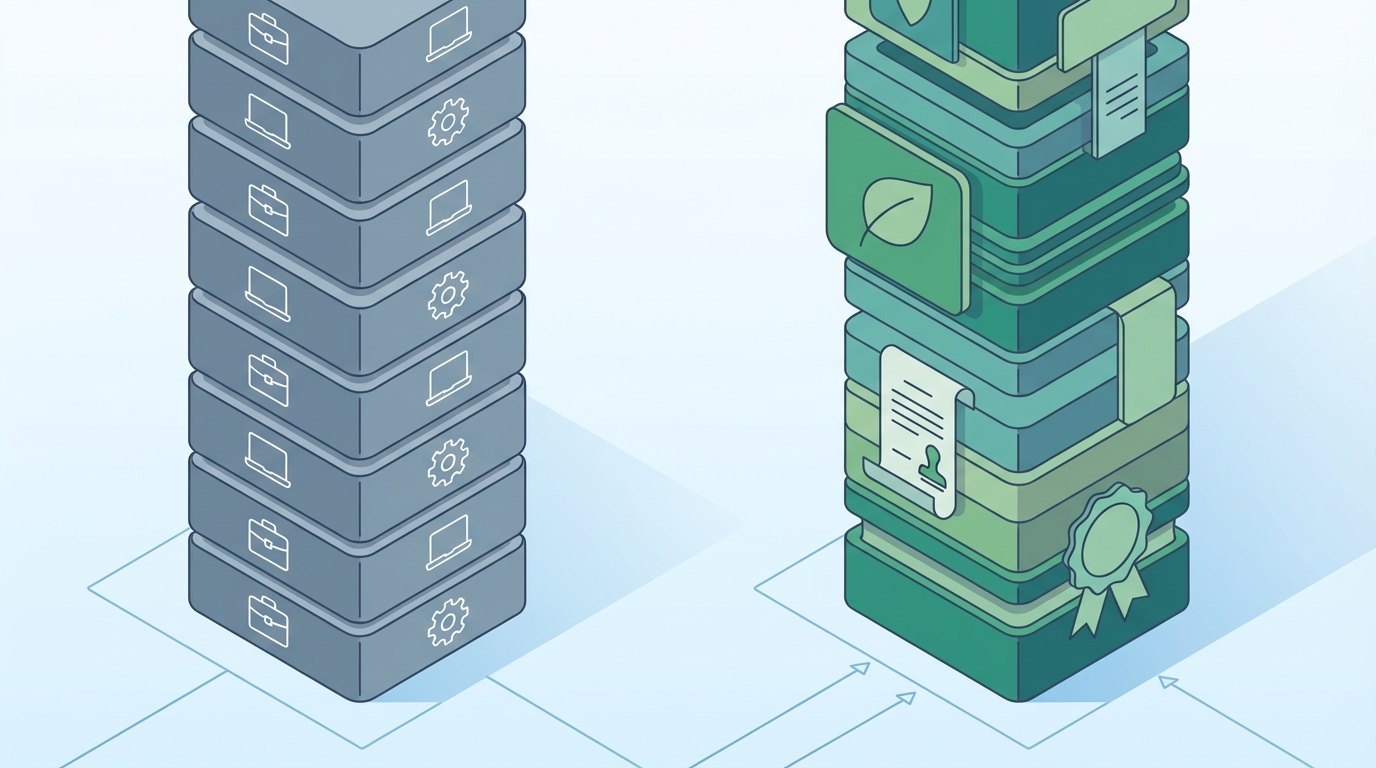
Every specialized industry has a signal layer that sits underneath the generic B2B data layer. Horizontal tools see the surface. Vertical intelligence sees what's underneath.
The reply rate math matters here too. Personalization only helps if it's built around signals that actually predict buying intent. Personalizing around someone's LinkedIn post from three months ago is table stakes in 2026. Personalizing around their Verra Registry retirement history is a different category of conversation, and it shows in the numbers: our campaigns reply at 3-7% on email and 14-22% on LinkedIn, at volumes a 500-account market can absorb.
In small, specialized markets, there's also a TAM burnout problem that generic AI SDRs accelerate. If you're selling to carbon credit buyers, your total addressable prospect list might be 2,000 companies. Send generic sequences to all of them and you've burned relationships with the people you need to close over the next three years. Vertical intelligence lets you prioritize sequencing based on actual readiness signals, and that matters exponentially more when your market is small.
Vertical intelligence changes the math
Read a Verra retirement record and you know the buyer's replenishment window. That's the whole difference. Vertical software does the actual work (research, analysis, outreach sequencing) because it starts from the right data. Domain specificity is defensible; generic tooling gets commoditized.
Emitree, Quantonica's sustainability vertical, is the proof of concept we can speak to directly. We pull from Verra Registry, Gold Standard, CDP disclosures, SBTi commitment databases, and ESG filing networks: data layers that no horizontal tool touches. Those are the campaigns behind the reply rates above. They hold because the personalization is grounded in signals that actually predict buying intent rather than LinkedIn activity.
Alternel, the student placement vertical, took a 180-minute manual workflow down to 10 minutes. The mechanism is the same: purpose-built semantic job board search across 1,000+ boards, hiring manager identification from indirect signals, multi-channel outreach sequenced around actual role-match quality. A horizontal AI SDR would generate a list of companies with open positions. Alternel tells you which specific hiring manager to contact, why this role matches your program's graduates, and when to send the first message.
The same layer exists in construction and industrial supply (permit databases, procurement portals); we haven't built it yet.
Five kinds of campaigns run on the same platform: cold outreach, conference (including meetings booked with attendees before you land), product launches, revival campaigns, and seasonal pushes. One calendar per account keeps them coordinated, so nobody gets a cold email three days after meeting you at a conference.
What to look for when evaluating an AI BDR
Most buyers compare AI SDR tools on surface features: channels supported, CRM integrations, UI quality, price. Those things matter. But for specialized markets, the decision criteria look different.
| Criteria | Alta | Quantonica |
|---|---|---|
| Data sources | 50+ generic B2B signals (job postings, news, CRM, tech stack) | Vertical-specific registries and databases (Verra, CDP, Gold Standard, SBTi, 1,000+ job boards) |
| Personalization depth | LinkedIn activity, CRM history, funding news | Built from the buyer's own record: credits retired, disclosure gaps, roles they're hiring |
| Reply handling | AI-managed conversation threads | Sequences stop the moment a buyer replies; your team takes the conversation |
| Pricing | Quote-based; prospects report about $1,750/mo entry including 3 seats (May 2026 reports, verified June 2026) | Custom, white-glove. Scoped pilot first: goals, volume, and price agreed before anything launches. No long-term commitment until we've both seen measurable value. Measured on cost per meeting, not per contact |
| Contract structure | Quarterly terms; paid 3-month proof of concept with early-exit option | Pilot first; a longer engagement only after measurable value, decided on your numbers |
| Domain ownership | Generic: same product for all industries | Vertical-native: built for one industry category |
| Campaigns | Primarily cold outbound | Cold, conference (attendees pre-booked before the event), launch, revival, seasonal |
| TAM protection | Not documented | One calendar per account: no prospect sits in two campaigns, and volume is capped so a 500-account market never gets burned |
| Measurement | Dashboards you assemble and interpret | Every meeting tied to the campaign that earned it; winning campaigns expanded |
| Industry knowledge | General B2B | Deep vertical expertise baked into signal selection |
One criterion that rarely gets asked: does the vendor know your industry well enough to tell you which signals matter before you figure it out yourself? Alta's team comes from monday.com, Intel, and Meta. Talented people building general-purpose tooling. Our team built Emitree out of frustration with how badly horizontal tools served sustainability sellers. The domain expertise came first, and the product grew out of it.
When Alta is the better fit
Alta is one of the stronger horizontal players, and for some teams it's the right call:
- You want multi-channel including AI calling. Katie for email and LinkedIn plus Alex for phone follow-up, with effectively unlimited messages per seat, is a genuinely broad channel mix for the price.
- Your personalization bar is LinkedIn-deep. The G2 praise is earned: referencing a prospect's months-old LinkedIn post is solid personalization for mainstream B2B, and Alta does it well.
- You're replacing or augmenting SDR seats in a simple-to-map market. If your buyers are identifiable from titles and generic intent signals, the per-seat model at a reported $1,750/mo entry undercuts hiring.
- You don't need extensive account research. When mapping the decision committee is straightforward, Alta's 50+ generic sources cover the ground without a custom intelligence layer.
The honest verdict: for volume across a mainstream B2B market, Alta beats us on cost per touch, and the Katie-plus-Alex channel mix is genuinely broad for the money. Worth noticing: Alta already sells a paid three-month proof of concept, a quiet admission that nobody should commit to outbound unproven. We agree and go further. A pilot is scoped with goals, volume, and price before anything launches, you watch every send, reply, and meeting land, and we don't ask for a long-term commitment until we've both seen measurable value. When the buying signals live in registries and filings no horizontal tool indexes, depth is what you're paying for, and every meeting is tied to the campaign that earned it.
Why we built this
We built Quantonica because vertical markets need more than another horizontal layer with better AI on top. They need someone who has already done the work of identifying which signals predict buying intent in their specific industry.
The "50+ data sources" pitch sounds good until you ask what's in the 50. For most specialized sellers, the answer is: nothing your industry actually runs on.
If your buyers make decisions based on signals that no standard data provider tracks, the tool that wins isn't the one with the best AI. It's the one that knows where to look.
Sources
- Alta, G2 Reviews: https://www.g2.com/products/alta-ai-revenue-workforce/reviews
- Alta, Trustpilot Reviews: https://www.trustpilot.com/review/altahq.com
- PR Newswire, "Alta Raises $7M Seed Round; Launches AI Revenue Workforce" (March 2025): https://www.prnewswire.com/il/news-releases/alta-raises-7m-seed-round-launches-ai-revenue-workforce-302391415.html
- Alta, "Meet Katie, Your New AI SDR Agent": https://www.altahq.com/ai-sdr
- AnyBiz, "Alta HQ: Review, Pricing, and the Best Alternative": https://www.anybiz.io/blogs/alta-hq-review-features-and-alternative/
- AiSDR, "AI SDR Pricing Comparison" (Alta entry pricing and contract terms, verified June 12, 2026): https://compare.aisdr.com/
Ready to see vertical intelligence in action?
See how Quantonica books meetings in markets generic AI can't read.