The new inbound: getting recommended by ChatGPT, Gemini, and Claude
Estimated reading time: 8 minutes
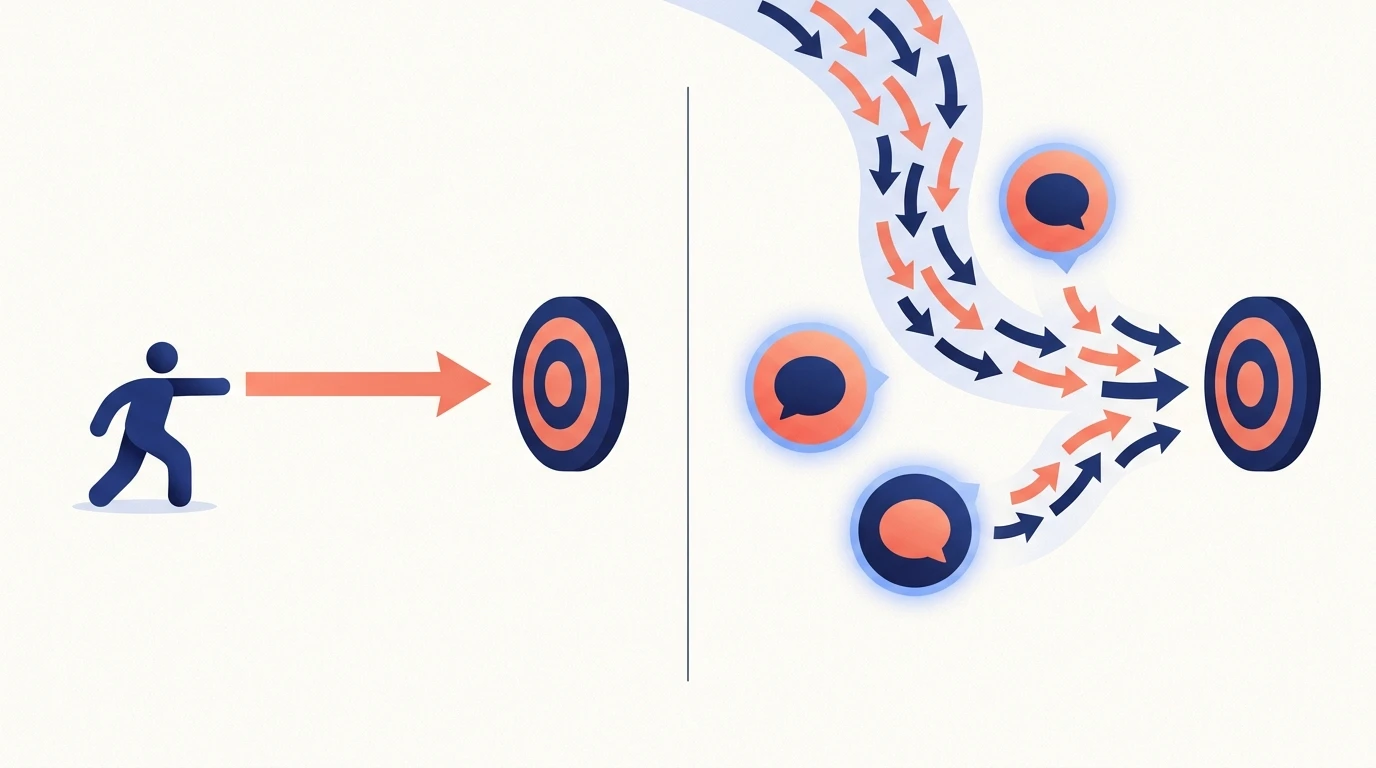
Cold outreach is the most direct motion in sales. You choose the accounts, you choose the timing, and when you want more pipeline you point the same machine at more accounts. It scales with ambition. With the right signals it can be hyper-targeted: one buyer, one trigger, one specific reason to talk. We built our business on that directness.
That doesn't make it the whole job.
Inbound is still worth building in the mid to long run, because outbound only reaches the buyers you thought to look for. The ones already searching have to be able to find you. Or more precisely: inbound still works, but the place it delivers leads has moved. Buyers ask a chat window now.
G2's buyer research puts numbers on it. 51% of B2B software buyers start vendor research with an AI chatbot more often than Google. AI assistants are the single biggest influence on shortlists at 17.1%, ahead of review sites at 15.1% and ahead of your own website. And a third of buyers bought from a vendor they had never heard of before a chatbot named it.
Read that last one again. A third of buyers bought from a stranger, on an algorithm's word.
The skeptic's objection is volume, and the skeptic is half right. ChatGPT still sends a fraction of Google's referral traffic. But Semrush's clickstream data shows those visitors convert at 15.9%, against 1.76% for Google organic. Small pipe, dense with buyers.
So we went through the research on how the algorithms pick: the academic experiments, the crawler logs, citation datasets covering hundreds of millions of AI answers. Most of what gets sold as "AI SEO" fails those tests. What follows is what held up.
Classic SEO still gates everything
In 2025 a NeurIPS benchmark called C-SEO Bench tested the popular on-page tricks for getting into AI answers across 16,000 questions and product recommendations. Most did nothing. Several made visibility worse. What consistently worked was getting retrieved in the first place and ranking high among whatever the engine pulled in. In other words, search rankings.
The correlation data agrees. Pages ranking #1 on Google get cited by ChatGPT 43.2% of the time, 3.5x the rate of pages outside the top 20. Page-one rankings correlate around 0.65 with getting your brand mentioned in AI answers, the strongest single predictor anyone has measured.
But the dependence on exact rankings is loosening fast, and the reason matters. In July 2025, 76% of Google AI Overview citations came from top-10 results. By March 2026 that figure was 38%. The engines now split every question into sub-queries (Google calls it query fan-out; ChatGPT runs 15 to 40 sub-searches for a single comparison question) and cite whoever answers each piece. A page that never ranks for "best carbon accounting software" can win the citation for the pricing sub-question.
So cover the sub-questions around your category, one focused page each, instead of pouring everything into a head term you'll never wrestle from an incumbent.
What the web says about you beats what your site says
The largest correlation study to date looked at 75,000 brands and asked what predicts visibility in AI answers. The top three signals were all off-site: YouTube mentions (0.737), branded web mentions (0.664), branded anchor text (0.511). Backlinks, the currency of twenty years of SEO, came in around 0.2.
A December 2025 arXiv experiment made the point more brutally. Researchers took 112 Product Hunt startups and asked ChatGPT about them two ways. Asked directly ("what is X?"), it recognized 99.4% of them. Asked organically ("best AI tools for..."), it surfaced 3.3%. The on-page GEO scores of those startups' sites had zero correlation with who got surfaced. What did predict it? Referring domains and an active Reddit community around the product.
Why would a polished site do so little? Because ChatGPT runs a live search on only about a third of queries. The rest get answered from the model's memory, and its memory is training data: the aggregate of what the web said about you the last time anyone crawled it. You can't edit yourself into that memory with a landing page. Other people write you into it.
One distinction worth keeping: being cited and being named are different outcomes. Across a study of thousands of AI answers, 62% of citations were anonymous; the URL appears as a source but the brand never appears in the text. Informational content earns those anonymous citations. Comparison and evaluation content is what gets a brand named and recommended.
Comparison pages are the format the machines trust
In an Ahrefs sample of 26,000 URLs that ChatGPT cited for recommendation-style questions, 43.8% were "best of" lists. On commercial queries generally, listicles take roughly 40% of all citations. The pattern holds across engines, and it carries an uncomfortable implication for anyone who finds listicles a little embarrassing: the machines treat a comparison table as evidence.
It gets better, or worse, depending on your scruples. ChatGPT demonstrably cites brand-owned "best tools" lists that rank the author first. About 35% of cited lists lived on low-authority domains, so you don't need a big site for this to work. The winning ones share a shape: current year in the title, an actual comparison table, around ten entries, honest competitor writeups, refreshed at least quarterly.
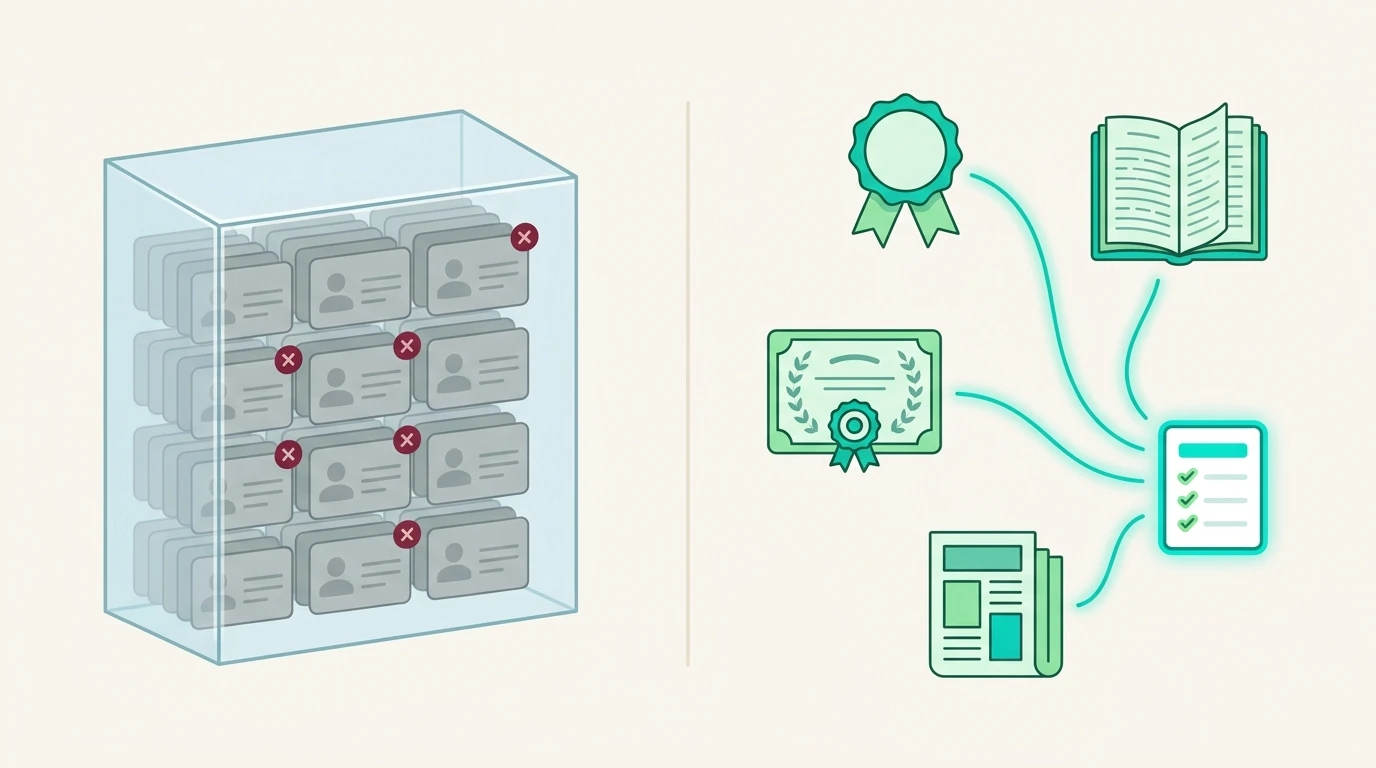
Review platforms play a different role than most founders assume. In a study of SaaS recommendation queries, 100% of the tools ChatGPT recommended had Capterra reviews and 99% had G2 reviews. Yet G2 and Capterra together earned 0.9% of the actual citations; the cited pages were niche blogs and vendor comparison pages. The platforms decide whether you're in the consideration set. The content decides how you're presented. Two different jobs, and you need both.
On the page, four things have receipts
The founding experiment of this field (Princeton, KDD 2024) rewrote pages nine different ways and measured share of AI answers across 10,000 queries. Three edits worked: adding quotes from named sources (+41%), adding statistics (+32%), citing references (+30%). Keyword stuffing was the only edit that reduced visibility (-8%). Later benchmarks found the gains smaller in the wild and shrinking as more sites adopt them, but the direction has replicated. Publish numbers worth quoting and the engines quote you.
Structure decides which passage gets pulled. 44% of ChatGPT citations come from the first third of a page, so answer first and elaborate after. The best-cited pages in a 129,000-domain SE Ranking study used sections of 120 to 180 words under descriptive headings, each self-contained enough to make sense ripped out of context.
Freshness matters more than most people expect. 76.4% of ChatGPT's most-cited pages were updated within the past 30 days, and a visible "last updated" date correlated with 1.8x more citations.
And one hard technical floor: AI crawlers fetch JavaScript but never execute it. Vercel's server logs (569 million GPTBot requests a month on their network alone) confirmed it. If your pricing table renders client-side, ChatGPT will describe your pricing from somebody else's page.
Three engines, three different games
Only about 13% of the domains Claude cites overlap with ChatGPT's. Across five major engines, roughly 70% of cited sources appear on one engine only. Brand mentions transfer across platforms; citations have to be earned engine by engine.
| ChatGPT | Gemini / AI Overviews | Claude | |
|---|---|---|---|
| Index behind answers | Own crawler plus scraped Google results | Googlebot and core Search | Brave Search |
| Cites most | Wikipedia, LinkedIn, niche blogs | YouTube (20.9%), Reddit (19.6%) | Company sites (64%), trade press |
| Barely cites | Vendor product pages directly | Pages Googlebot can't snippet | Reddit (~0%), social (0.9%) |
| One check to run today | OAI-SearchBot allowed in robots.txt | Google-Extended not blocked | site:yourdomain.com on search.brave.com |
A few specifics earn their space. LinkedIn jumped into ChatGPT's top five cited domains for professional queries this year, which makes company-page posts worth more than they were. Gemini's citation graph runs on YouTube and Reddit, which together take 40% of AI Overview citations; a modest YouTube presence covers the fastest-growing source. And Claude is the odd one out in a way B2B founders should notice: it runs on Brave's index, ignores Reddit entirely, prefers vendor documentation and niche trade outlets, and delivers up to 18.5% of measurable B2B AI referrals despite a small consumer share. Almost nobody optimizes for it, which is exactly the argument for checking whether Brave can see your site at all.
Where to save your time
Some things you can skip with a clear conscience. Start with llms.txt, the proposed standard for describing your site to AI crawlers: a server-log study across 137,000 domains found 97% of the files never received a single request, and Google confirmed Search ignores it. Schema markup fares no better as an AI play. The one causal study on it (1,885 pages that added JSON-LD versus 4,000 controls) found no citation lift, plus a small, statistically significant negative on AI Overviews, and FAQ schema correlated with fewer ChatGPT citations. And anyone selling deterministic "AI rankings" is selling weather: citation sets are volatile enough that ChatGPT's Reddit citation share swung from 60% to 10% in a single month.
Why now beats later
Every benchmark that tested crowding found the same thing: gains shrink as more sites adopt these tactics. The Princeton study also found the flip side, an equalizer effect. When pages optimize, the lower-ranked site gains most: the 5th-ranked source gained 115% visibility from edits that cost the 1st-ranked source 30% of its share. The mechanics currently favor the small vendor over the incumbent.
They favor niches even more. When no authoritative source exists for a topic, the engines cite whatever exists. In a niche, one genuinely good benchmarks page or comparison hub can become the answer and hold it, because the volatility that plagues broad topics barely touches a query only you bothered to answer.
We see this from both sides at Quantonica. Outbound is the motion we run for clients because it's direct and starts producing in weeks. But the same vertical lens applies here: the intelligence that tells you which buyers to contact also tells you which questions your niche keeps asking with nobody good to cite.
Outbound you can start tomorrow morning. That's its beauty. AI visibility takes months to compound, and that's its moat. Somewhere right now an assistant is answering "what's the best option for..." in your category, and it will name somebody. Might as well be you.
Sources
- G2 - 2025 Buyer Behavior Report — AI chatbots as the #1 shortlist influence; 51% of buyers starting research with AI; a third buying from previously unknown vendors.
- Aggarwal et al. - GEO: Generative Engine Optimization (KDD 2024) — the founding experiment: quotes +41%, statistics +32%, citations +30%, keyword stuffing -8%; the equalizer effect.
- Puerto et al. - C-SEO Bench (NeurIPS 2025) — most on-page GEO tactics ineffective or negative; retrieval rank beats rewriting; gains decay with adoption.
- Ahrefs - AI brand visibility correlations — 75,000-brand study; YouTube and web mentions dominate, backlinks weak.
- Ahrefs - AI Overview citations vs the top 10 — top-10 citation share falling from 76% to 38%; query fan-out.
- Semrush & Kevin Indig - The Ghost Citations study — 62% of AI citations never name the brand.
- Ahrefs - Best-of lists research — 43.8% of ChatGPT-cited URLs are lists; self-published lists that rank the author first still get cited.
- Derivatex - B2B SaaS AI citation study — review platforms earn 0.9% of citations while gating inclusion; cited pages are list-structured comparison content.
- SE Ranking - ChatGPT citation factors (129K domains) — freshness, visible timestamps, section length, referring domains as top predictor.
- Otterly - Claude citation study — Claude's 64% brand-domain citations, near-zero Reddit and social.