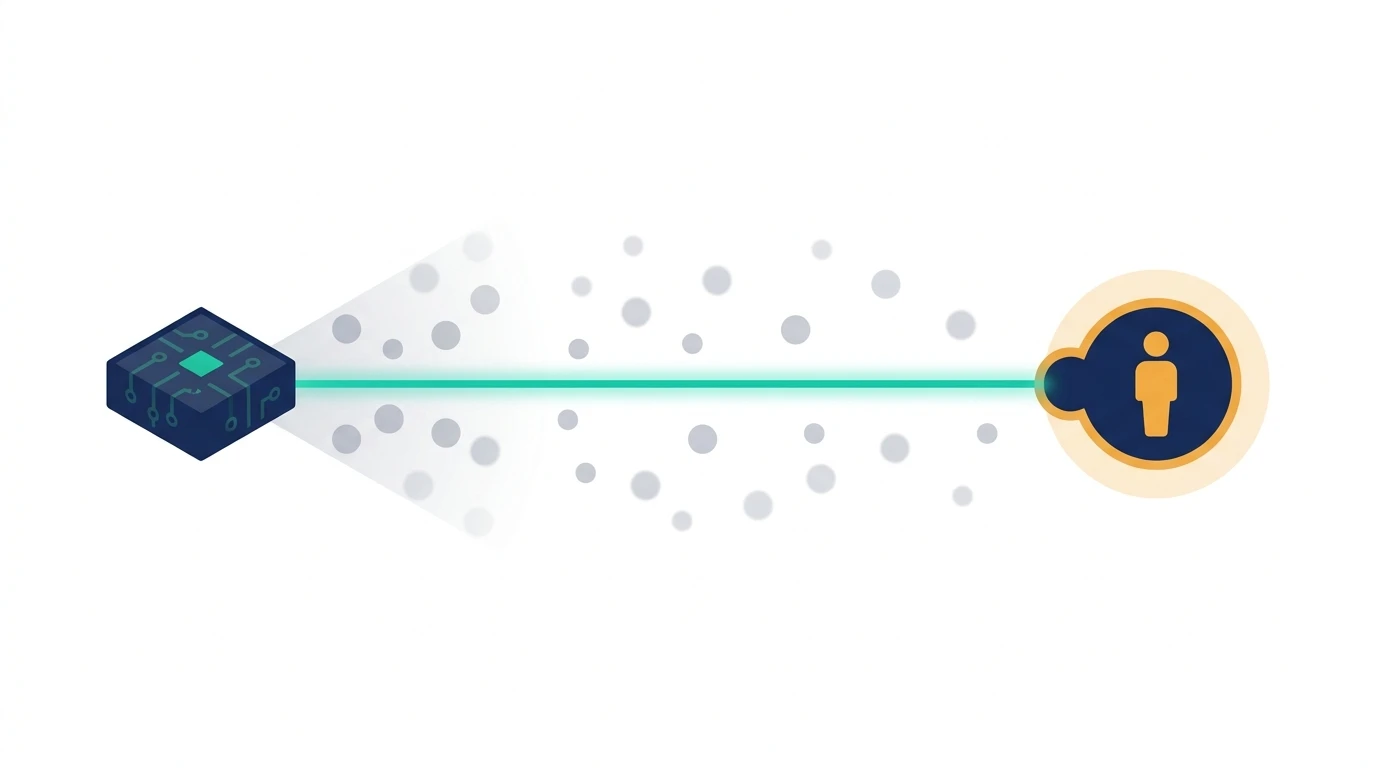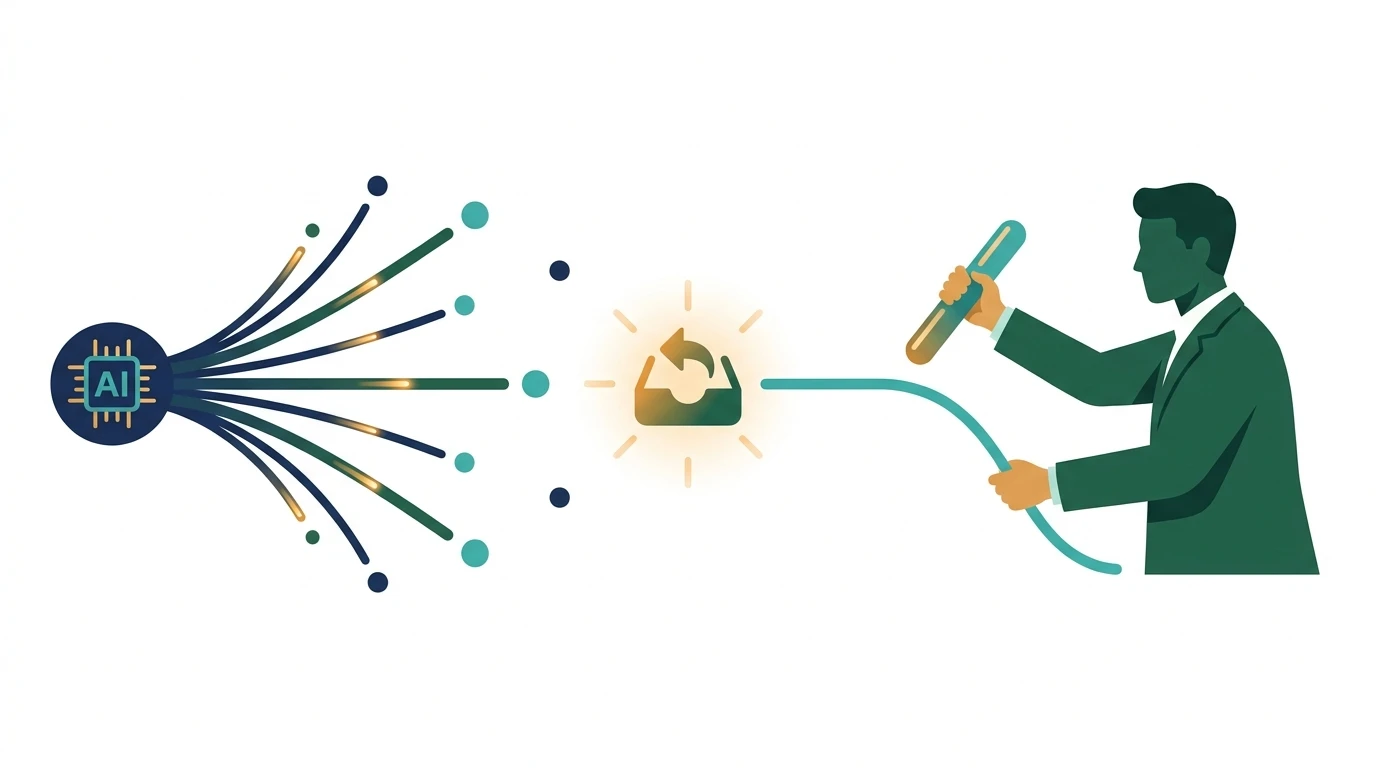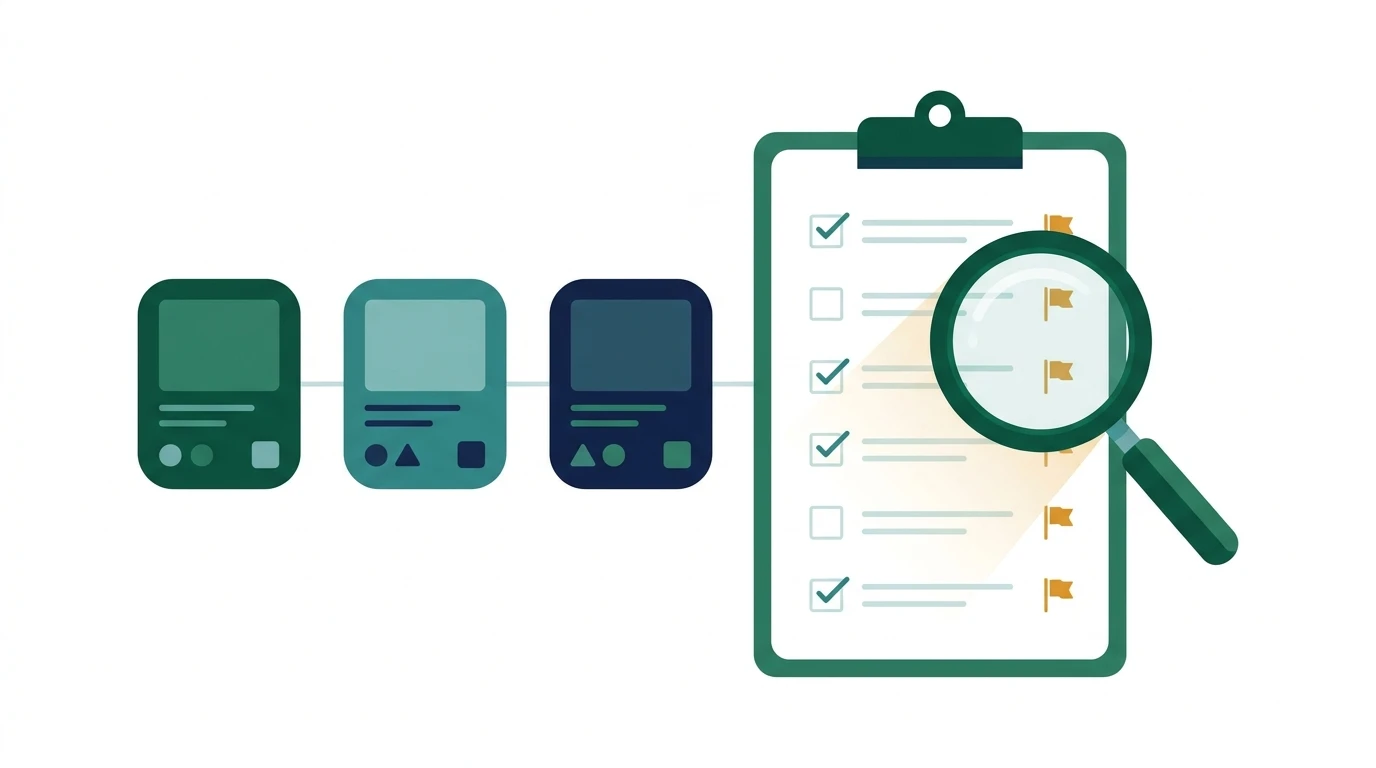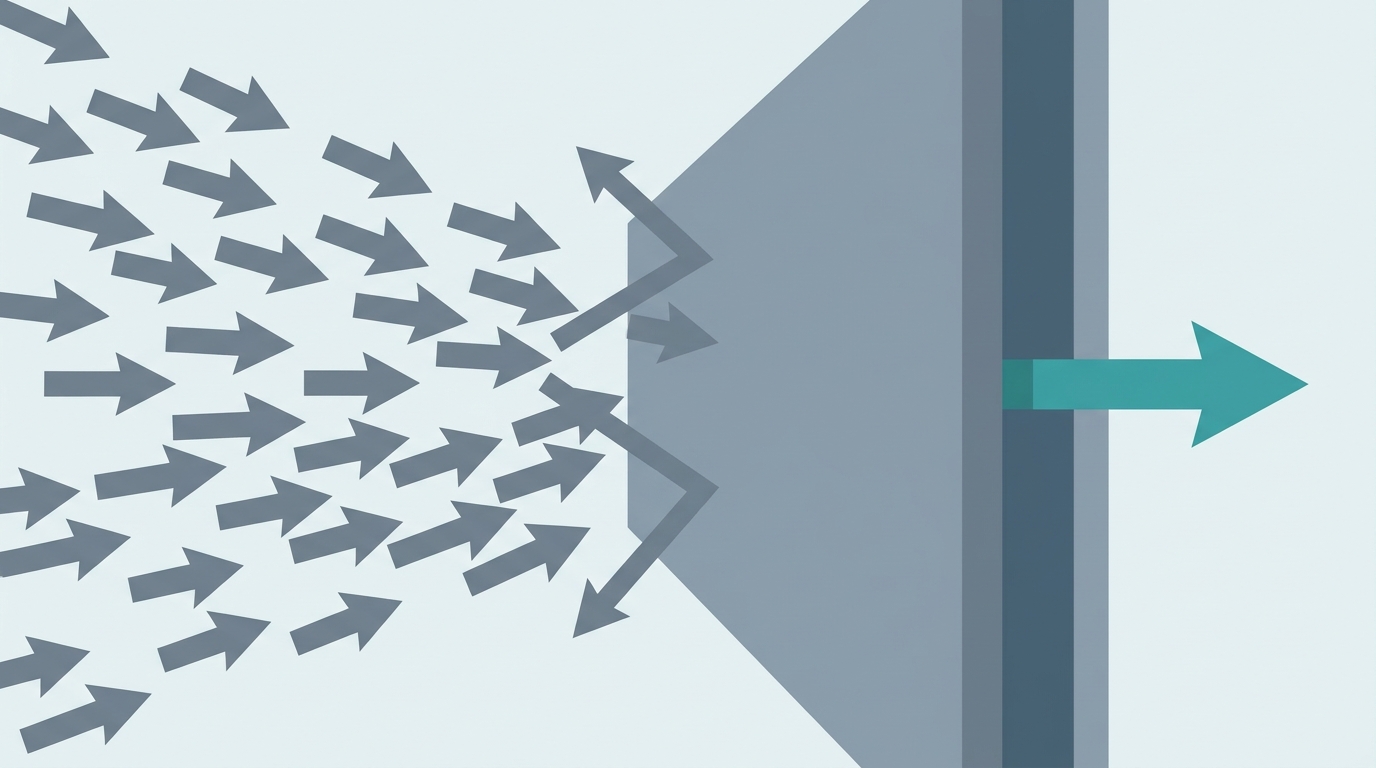
Distribution is the last differentiator. Then it commoditizes too.
Estimated reading time: 8 minutes
When a competitor pulls ahead, the engineer's instinct is to build a better product. Ship the feature they don't have. Out-engineer them.
That instinct is now wrong, and the data says so plainly. Bessemer's 2025 analysis puts median feature replication time at 2.4 weeks. AI inference costs dropped 280x in 18 months. The thing you'd stay up three weekends building can be cloned before your launch post stops getting likes.
Satya Nadella said it about the layer underneath all of this: "Models are getting commoditized." When the models are commodities, the features built on them are commodities, and the products built on those features are commodities too. Bessemer calls it the commoditization cascade. Each layer collapses into the next.
So if the product can't be the moat, what is?
Distribution is the last thing left standing
Peter Thiel said it without hedging: "Superior sales and distribution by itself can create a monopoly, even with no product differentiation. The converse is not true."
Read that second sentence again. A great product with no distribution does not create a monopoly. A mediocre product with great distribution can.
The companies that win seem to know this in their spending. Tomasz Tunguz studied 36 public SaaS companies that reached $1B+. In year one, they spend roughly 1:1 on sales and engineering. By year two the ratio shifts to 2:1 toward sales, and it stays there for the life of the company. The ones that make it invest 2.3x more in distribution than in product.
That isn't a startup quirk. It's the pattern across a century of business history, and the better product loses in case after case.
| Better product | Won by distribution | Why |
|---|---|---|
| Pepsi (wins blind taste tests) | Coca-Cola | 225 bottling partners, 200+ countries, 2.2B servings a day |
| Slack (better UX) | Microsoft Teams | Bundled free with M365; Slack was a per-seat add-on |
| Betamax (better picture) | VHS | JVC licensed broadly, Sony kept Betamax proprietary |
| Netscape (better browser) | Internet Explorer | Pre-installed on every Windows machine for 15 years |
Frito-Lay runs 15,000 delivery routes and holds 60% of the US salt-snack market while artisan chips win the taste awards. State Farm sells a commodity (auto insurance) and holds 18.9% of the market on the strength of 19,000 agents. The product is interchangeable. The channel is the moat, and the moat compounds for decades.
There's a structural reason it compounds. An incumbent's cost to push one more product through an existing distribution network is close to zero. A new entrant pays the full freight on every sale. That asymmetry widens over time, which is why distribution incumbents usually fall only when an entirely new channel opens underneath them.
So the modern answer writes itself: AI commoditizes the product, distribution is the durable edge, point your AI at distribution. Spin up AI SDRs, automate the outreach, win.
That's where most of the thinking stops. It's also where it gets dangerous.
AI distribution commoditizes on the exact same curve
AI distribution is also a product, so it commoditizes like one. That's the part the "distribution is the moat" crowd skips.
When everyone has AI SDRs, having AI SDRs is table stakes. The advantage normalizes the moment your competitors buy the same tools, which they already have. MIT Sloan put it cleanly: "If everyone has access to the same technology, even if it is new and valuable, it may move the market as a whole but will not uniquely advantage anyone."
The channel data already shows the decay. Cold email reply rates fell from about 6.8% in 2023 to 3.43% in 2026 (Instantly's benchmark report). Prospects now get 15+ cold emails a week, around 780 a year. Roughly 160 billion commercial emails go out daily.
Jason Lemkin ran the experiment in public. He replaced his sales team with 20 AI agents managed by 1.2 humans and pulled $1M in revenue in 90 days on roughly $100K. Impressive, until you read the second number: emails sent went from 7,000 to 70,000. Ten times the volume means ten times faster market exhaustion. In a mid-market segment of 1,000 accounts, you burn through your entire addressable market's patience in months.
And the patience burns hotter now. Lemkin admitted he started blocking AI SDR emails himself, multiple per week, something he never did with human-sent email. People block AI senders with zero hesitation. They give a human the benefit of the doubt. They give a bot the spam button.
This is the Red Queen Effect, straight out of Lewis Carroll: "It takes all the running you can do, to keep in the same place." Company A adopts AI outreach and gets a lift. Companies B through Z adopt the same tools. Inboxes flood, reply rates sink, the advantage evaporates, and everyone now spends more to land where they started. Then the cycle repeats with AI voice, AI video, whatever's next.
You don't escape the Red Queen by running faster. You escape by running differently.
The buyer is building a wall while you scale the volume
Even if saturation didn't kill generic volume, the buyer side would.
AI is rebuilding the inbox from the receiving end. Google's email AI delivers daily briefings that decide what's worth surfacing. Microsoft's "Prioritize My Inbox" filters across Outlook. Mailbox providers summarize messages before a human ever sees them. The first reader of your outreach is increasingly a bot deciding whether a human should bother.
So the steady state isn't seller-AI reaching buyers. It's seller-AI versus buyer-AI, and the battlefield moves from human attention to machine triage. Generic volume dies twice in that world: once from saturation, once from the filter that screens it out before anyone reads it.
If your edge is "we send more, faster, with AI," you're optimizing the exact thing both forces are designed to defeat.
What's left when both sides commoditize
Strip out the commodity product and the commodity AI distribution, and something specific remains.
MIT Sloan calls it residual heterogeneity: as AI levels the technical playing field, the differences AI can't supply become more valuable, not less. The edge stops being capability everyone can buy and becomes the thing only you have access to.
In distribution, that thing is signal. Knowing who is in-market, why, and when, before your competitor's identical AI stack figures it out. The numbers on signal-based outreach aren't subtle:
| Approach | Conversion |
|---|---|
| Cold email, volume-based | 1-5% reply rate |
| Signal-based, high-intent | 4x conversion vs. baseline |
| Signal-optimized journeys | 5-18x visitor-to-pipeline |
| Champion job-change tracking | 40% conversion, 114% higher close rates |
UserGems reports 47x pipeline ROI just from tracking when a known champion changes jobs. Bombora's intent data showed 342% ROI in a Forrester study. The shift is from spraying everyone to reaching the few accounts where something just changed.
But intent data has the same problem as everything else: Bombora and UserGems sell to everyone. Buy the same generic signals as your competitors and you're back on the Red Queen treadmill, just with better targeting.
The signals that actually compound are the ones tied to your buyer's specific world. Generic intent says a company visited a pricing page. Domain intelligence says a carbon-credit buyer just retired a batch of Verra credits, or a training school's ideal employer just posted twelve roles that match its graduates. Same idea, different altitude. One is available to anyone with a credit card. The other takes knowing the industry well enough to know which events mean a deal is forming.
Vertical intelligence is the edge that doesn't normalize
Vertical intelligence is the edge that survives both rounds of commoditization. We saw why building across two very different markets.
In sustainability, the buying signals aren't in any horizontal database: Verra and Gold Standard retirements, SBTi commitments, CDP disclosures. So we built Emitree to read those signals the way an insider would and put them in front of the outreach. Teams running that layer cut research time per prospect by 84% and booked 2.5x more meetings, because the message arrives tied to something the buyer just did. In student placement, the signal is a job posting that semantically matches a program's graduates even when it never uses the obvious keywords, with the hiring manager identified even when the listing hides them. That's Alternel. Different verticals, same architecture: the intelligence layer is industry-specific, so the outreach lands like it came from someone who actually understands the buyer.
Horizontal platforms give every customer the same data, which is exactly why that data stops being an advantage the moment two competitors both have it. Vertical intelligence doesn't normalize the same way, because the work of understanding an industry's signals doesn't compress into a single API everyone can call.
The question is changing
For twenty years the distribution question was "can you reach them." AI answered it. Anyone can reach anyone now, at infinite scale, for almost nothing. Which is precisely why reach stopped being worth anything.
The question underneath it now is different: do you have something to say that their filter will let through, and a reason to say it that only you would know. That's not a volume problem. No amount of AI sending solves it.
When everyone can reach everyone, the edge belongs to whoever understands the buyer one layer deeper than the tools everyone shares.
Sources
- Bessemer Venture Partners - State of AI 2025 — Feature replication at 2.4 weeks median; the commoditization cascade framework.
- FourWeekMBA - Peter Thiel on Sales & Distribution — The foundational claim that distribution alone can create a monopoly.
- Tomasz Tunguz - SaaS Spend Allocation Benchmarks — The 2.3x distribution-over-product spend ratio across $1B+ SaaS companies.
- MIT Sloan Management Review - Why AI Will Not Provide Sustainable Competitive Advantage — Residual heterogeneity; AI as homogenizer, not differentiator.
- Instantly - Cold Email Benchmark Report 2026 — Reply rate decline from 6.8% to 3.43%; channel saturation data.
- SaaStr - Could Block Be the Death of the AI SDR? — Lemkin's 7,000-to-70,000 email volume jump and AI-sender blocking behavior.
- UserGems - Champion Tracking — 47x pipeline ROI and 40% conversion on champion job-change signals.
- Bombora - Intent Data Benchmarking — 342% ROI from intent data per Forrester study.
- MarTech - AI Is Rebuilding the Inbox — Buyer-side AI triage and the seller-AI vs. buyer-AI dynamic.
- Odd Noodle - The Red Queen Effect — The run-to-stand-still framing applied to competitive distribution.