The negative-reply playbook: what to do with every no
Estimated reading time: 17 minutes
Gong counted what it takes an average rep to book one meeting from cold email: 344 sends. That figure comes from 28 million emails, updated May 2026, and it moves in one direction.
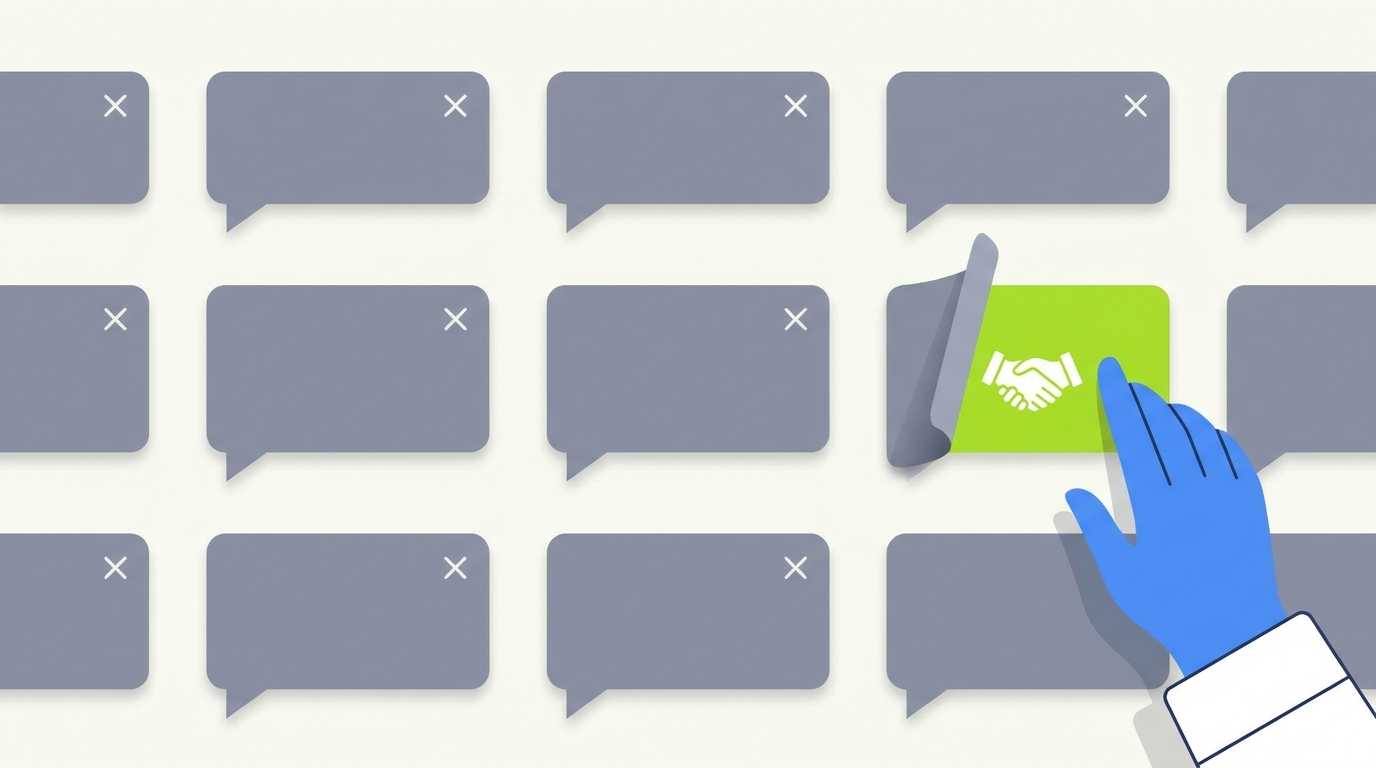
Now count what's already in your inbox. When Sales.co classified 61,770 real replies, 45.1% were auto-replies, 29.9% negative, 14.1% positive. Strip out the robots and roughly one human reply in four is a yes. The other three usually get archived.
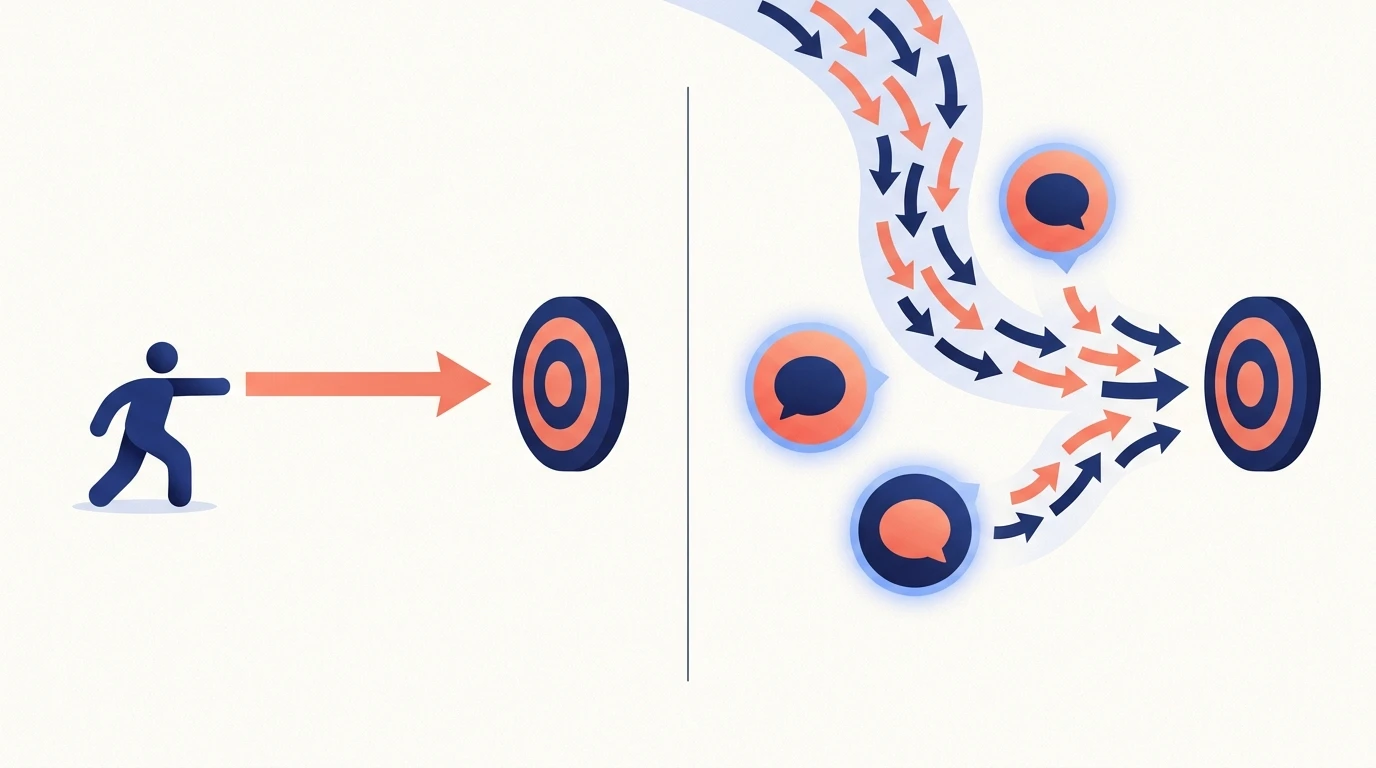
Archiving them is the expensive part. In the 30MPC x Gong analysis of 85 million cold emails, top-decile reps convert 29.6% of replies into meetings; average reps convert 15.3%. The same report shows top reps booking 8.1x more meetings on only 4.2x more replies. About half of the elite advantage is earned after the reply lands.
The territory is also smaller than it looks. Across 300 million cold calls, Gong found the top five objections cover 74% of everything you'll hear, and half of all objections are dismissive reflexes: "not interested," "send me some info," "call me in six months." A short list of practiced plays covers almost everything that will ever hit your inbox.
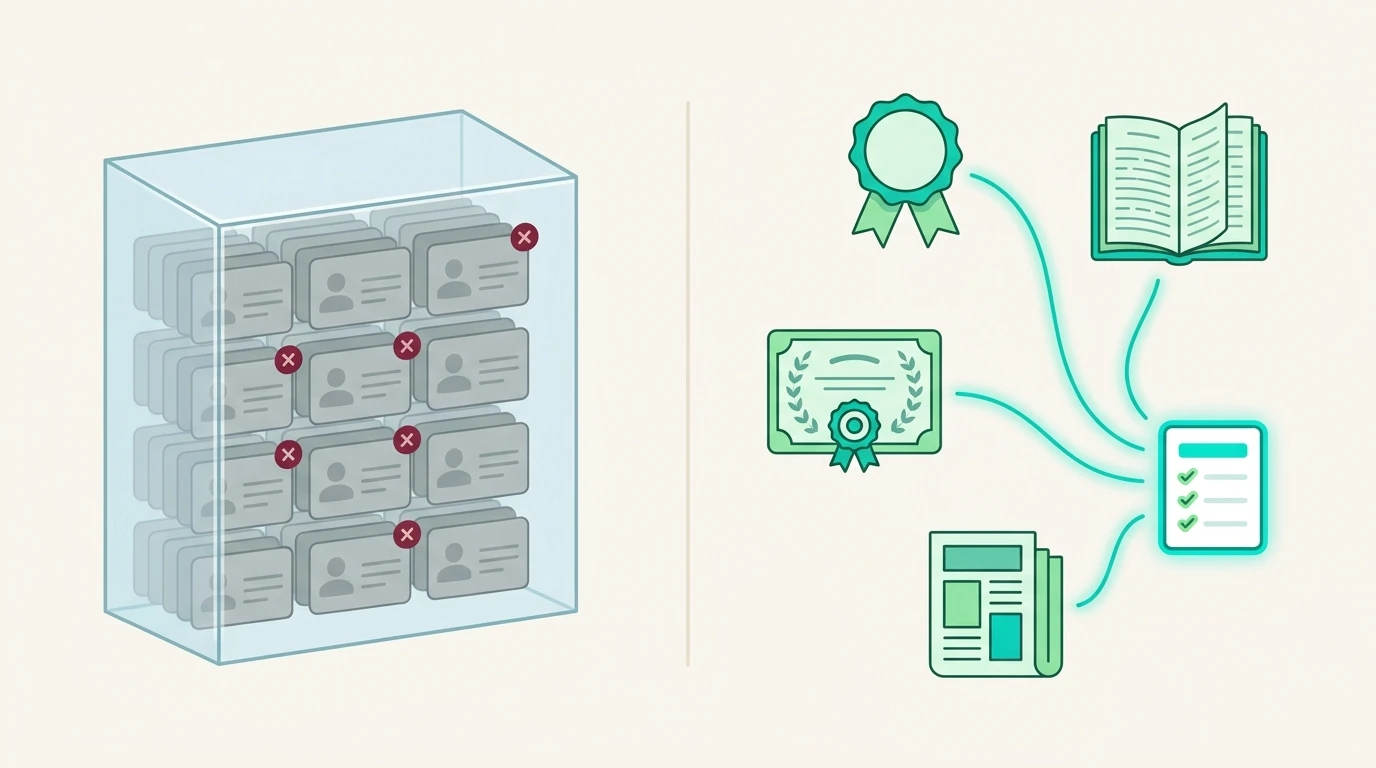
This is that list: an objection-handling playbook of thirteen plays, one routing table, and the numbers behind each move. Every stat here survived a two-round fact-check against its primary source; the famous ones that didn't survive got a fact-check of their own, and the argument for working replies harder than send volume is its own post.
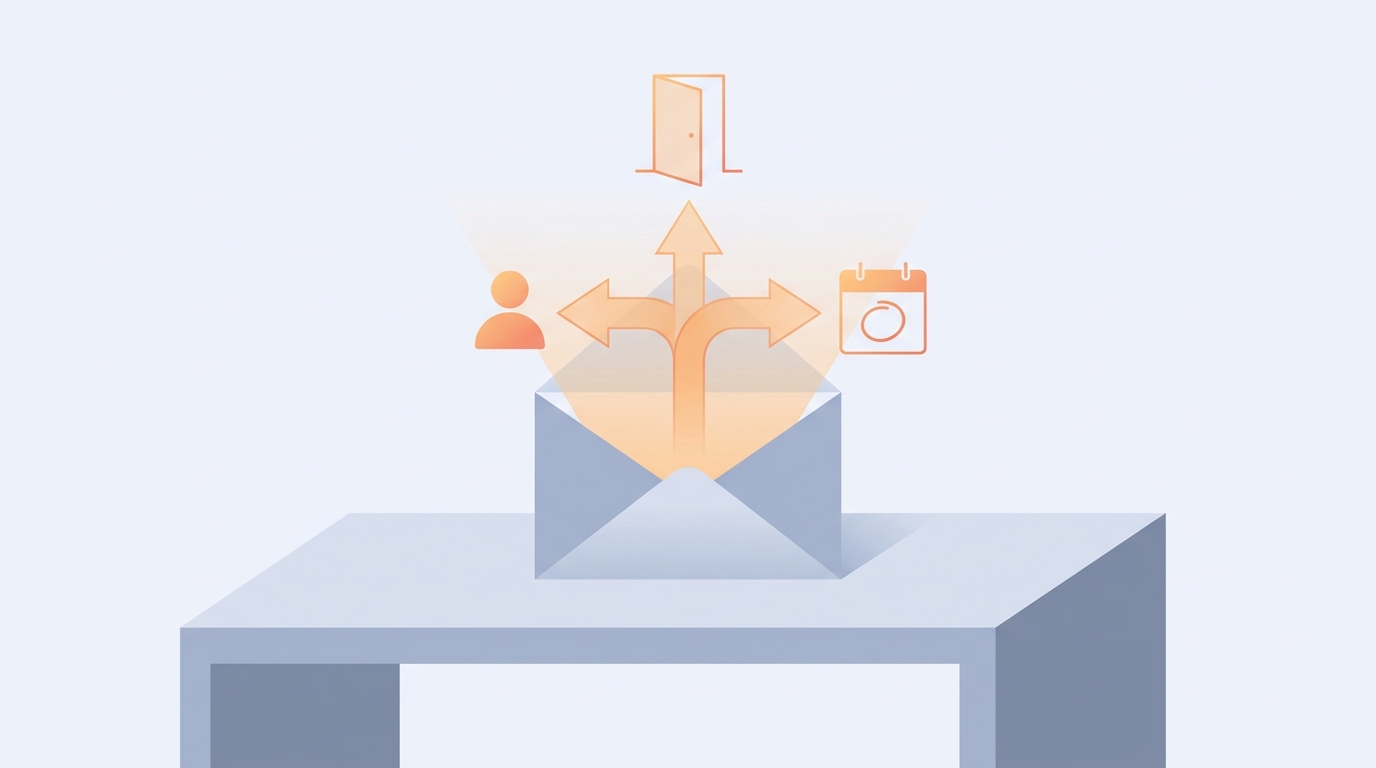
Route the reply, then run the play
Find the phrase they actually wrote. Run that play.
| What they wrote | Play |
|---|---|
| "Not interested" / "we're all set" | 1 |
| "We already use [vendor]" / "built in-house" / "under contract" | 2 |
| "We tried this before, it didn't work" | 3 |
| "Not now" / "no budget" / "circle back in Q3" | 4 |
| "Too expensive" / "just send pricing" / "we're too small" / "[competitor] is cheaper" | 5 |
| "Wrong person" / "talk to Sarah" | 6 |
| "Send me some info" | 7 |
| "I'll forward it internally" | 8 |
| "Who is this?" / "How did you get my email?" | 9 |
| Reply from an assistant on the target's behalf | 10 |
| Out-of-office / auto-reply | 11 |
| "Remove me" / anger / profanity | 12 |
| Replied once, then silence | 13 |
Three tiebreaks. An opt-out overrides everything: "not interested, take me off your list" is play 12, never play 1. Route on the most specific signal: "not interested, we already use HubSpot" names a vendor, so it's play 2. And one diagnostic question per thread: once any play has surfaced the real reason, jump straight to the matching play's ask instead of making the prospect answer a second menu.
The whole playbook also fits in a prompt. Paste it into any AI chat, add a line about what you sell, paste the reply you just got, and it routes the reply and drafts the response using the plays below.
Nine rules that govern every objection reply
- Reply to the person, never to the objection. The first no is usually a reflex, and you don't yet know which no you got. Reply one exists to find out.
- Accept before you explore. Agree with the no genuinely, then earn one question. Fighting someone who isn't fighting you is impossible, and this is the one point where Gong's call data, Josh Braun, 30MPC, Sandler, and Chris Voss all converge.
- One cognitive ask per reply. Lavender's data across 231,818 emails: replies with zero or one question get equal, optimal response rates, and response drops when questions stack. Keep email replies to 50-125 words, LinkedIn under 400 characters, and mirror the length and register of what they sent.
- Give the easy out in the same sentence as the ask. "Totally fine to say no" measurably lifts replies (a meta-analysis across 52 experiments puts the effect at g = 0.44), but the effect halves when the permission sits away from the ask.
- Use no-oriented questions on stalled threads. "Have you given up on X?" is easier to answer than "do you have 15 minutes?", and a "no" restarts the conversation.
- Every non-yes gets a disposition, immediately: a reason code, a re-entry trigger or date, and a hook in their own words, stored somewhere that fires on its own. A deferral noted in your head is a silent loss.
- Know when to stop. Hard opt-outs are honored on sight. Profanity gets silence. Pushing past a clear no spends your domain, your brand, and the account.
- Never grade or comment on how the prospect replied ("appreciate the straight answer," "better than silence," "instead of ghosting me"). Thank them plainly and move on.
- Plain courtesy beats punch. If a line reads clever, quotable, or like a technique being run, flatten it into ordinary speech: ask permission before a diagnostic question, and word the easy out in plain everyday language rather than a slick sign-off.
On timing: 77% of cold-email replies arrive within 12 hours of a send (CIENCE, ~6 million rows), so a small team running two or three fixed sweeps a day covers nearly everything. Speed is mandatory only for opt-outs, which carry a compliance clock, and hot positives. When 50 replies are waiting, work opt-outs first, then positives and referrals, then objections that name something specific, then generic not-interesteds. And never let an after-hours bot fire a booking link into an unread reply; a calendar link landing on a "remove me" is a compliance failure.
The 13 plays: how to respond to every no
1. "Not interested" / "we're all set"
Gong's read on the dismissive no: you genuinely don't know why they're out. Timing, an incumbent, wrong person, or a message that missed. So reply one's only job is diagnosis. Offer a 2-3 option menu; answering a menu costs less than composing an explanation, and the answer's specificity tells you whether the no is real. Detail means real. Vague means brush-off.
No worries at all, thanks for getting back to me. If you don't mind one quick question before I leave you be: is [problem] just not a focus right now, already covered, or was my email just not the right fit for what you do? Totally fine to skip answering.
One caution, from a buyer who dissected this publicly (Kyle Asay, VP at LaunchDarkly): never answer "this isn't my priority" with "so [obviously desirable outcome] isn't a priority?" If they're already chasing the outcome another way, that question reads as manipulation. Ask where they stand on the approach.
On a true no, exit clean and leave a hinge:
Understood, I'll close this out. If it was timing rather than the idea itself, reply "later" and I'll check back in six months.
One diagnostic, then stop chasing. Disposition and move them to nurture.
2. "We already use [vendor]" / "built in-house" / "under contract"
An incumbent means they've already bought into the category; what you're up against is inertia and switching-cost fear more than loyalty. Never argue superiority, because they will defend their own past decision. Compliment the incumbent, then hand them the scorecard as one fused ask:
Makes sense, [competitor] is a solid choice. Out of curiosity: what keeps it from being a 10 out of 10 for you? Whatever that missing piece is usually tells us both whether a comparison is even worth your time.
For in-house builds, ask what the maintenance costs in engineering time each quarter; that number flips most build-vs-buy math around year two. For contracts, stop fighting and ask when it comes up for review. Log the renewal date and any complaint they volunteer, then re-approach about 90 days before renewal with their own words as the opener.
3. "We tried this before and it didn't work"
The reply itself is evidence the pain still lives; someone truly indifferent deletes the email. They're protecting themselves from a second burn, so split the category from the vendor and diagnose what actually broke before defending anything:
Totally fair to be wary if you've been burned. Genuinely curious, so I don't repeat someone else's mistake: when you say it didn't work, what broke down: the results, the rollout, or the fit with how your team works? I'll tell you honestly if we'd hit the same wall.
If the failed vendor was you, own it before asking anything (Jeb Blount's move: acknowledge, take the pressure off, discover, and only then show what changed). Their description of the failure is the best objection data you'll collect this quarter.
4. "Not now" / "no budget" / "circle back in Q3"
Treat this bucket as alive: in Gong's 300-million-call dataset, "need to think about it" replies show no drop in win rate. The risk is vagueness, because vague deferrals never self-execute. Convert the time into something calendared and permissioned:
Thanks for letting me know. If now isn't the moment, happy to stay out of your inbox. Mind if I ask one thing: when does budgeting for things like this usually happen on your side? I'll time anything further to that.
If their stated month is a fiscal-year start, land the re-approach in its first two weeks. HockeyStack's data across 10,000+ closed-won deals shows close rates peaking in Q4 and Q1, and the swing concentrates in outbound-sourced deals.
5. "Too expensive" / "just send pricing" / "we're too small" / "[competitor] is cheaper"
Four different things wearing one costume, and nearly half of price objections on cold calls are reflexes fired before value registered (Gong again). Defending the number treats a reflex as real and takes you out of the buying process.
"Too expensive": agree, isolate, then reprice the problem instead of the product.
Understood. Price aside for a second: is [problem] actually costing you enough right now to be worth solving? If it isn't, no number I quote will make sense. If it is, worth checking whether the math works before you rule it out?
"Just send pricing": give a real range plus one qualifying question. The follow-through is the tell; a real buyer answers the question with specifics, a brush-off goes vague.
"We're too small": usually masks an ROI fear or an assumed enterprise price tag. Surface which, and if it's a genuine mismatch, say so and ask for a peer referral instead.
"[Competitor] is cheaper" is a buying signal: you made the consideration set. Force like-for-like ("cheaper on the sticker, or cheaper after you count [the thing the cheaper option leaves manual]?") and never reflex-discount.
6. "Wrong person" / "talk to Sarah"
The best possible non-yes. A pointer from a coworker is the single most trusted information source B2B buyers have: Forrester puts colleagues at 82%, ahead of current vendors at 79%. The constraint is that referrals rarely get asked for; the widely cited Dale Carnegie figure has 92% of customers willing to refer and 11% of salespeople asking.
No name given, ask for direction, because a first name costs them one line while an intro costs effort:
No worries at all, and thanks for the quick reply. Who owns [specific area] on your side? A first name is plenty and I'll take it from there, leaving you out of it.
Name given, that's tacit permission. Email the named person with the referrer in line one, thank the wrong person, and keep them tagged as an ally. Then check what your sequencer did with their reply: stopping the sequence is correct, but some tools quietly mark the contact as suppressed, which blocks you from ever using this ally again. Clear the flag.
7. "Send me some info"
Default read: a polite no. The tell is specificity, since genuine requesters can say what they want. The order of operations matters more than the wording: scoping question first, always; name the brush-off kindly only after a vague answer.
Happy to. So I don't send a 30-slide deck you'd have to reverse-engineer: what's the single biggest headache with [problem area] right now? I'll send only the part that speaks to that.
On a vague answer ("whatever you have"):
I might be misreading, and forgive the blunt question: usually when someone says "send me anything," it's a polite way of saying no, which is completely fine. Is that the case here? If so I'll close this out; if not, tell me what to focus on and I'll make it worth the read.
8. "I'll forward it internally"
The most dangerous reply in the polite bucket. It sounds cooperative while writing you out of the room: you're now represented by someone with no incentive and no ammunition. Gong's army-of-champions study (10M+ conversations) found winning deals average 8 buyer email contacts against 3 in losing deals; a passive handoff leaves you at one.
Convert the promise into three concrete things: a named owner, a forwardable two-liner they can paste as-is, and a dated check-in.
Really appreciate that. Two things so it doesn't die in someone's inbox: who's the right owner for [area] on your side, and what's the first thing they'll want to know? I'll send you a two-line version you can forward as-is, so you're not stuck making my case for me. And if it's easier, happy to join 15 minutes with them directly.
Give it about three business days before the check-in. If the named owner surfaces, open that thread directly and reference the handoff.
9. "Who is this?" / "How did you get my email?"
A legitimacy test, judged on tone more than content. Overconfident tone is itself one of the top triggers of manual spam reports (Allegrow). Answer briefly, name the public source, and pivot to why you reached out:
Fair question. I found you through [LinkedIn / your company's site / a public industry list] while researching [specific trigger]. I reached out because [one line of relevance]. If that's not something you want in your inbox, say the word and I'll remove you.
If the tone was hostile rather than curious, run play 12.
10. The assistant or gatekeeper reply
A rejection arriving within minutes, in generic wording, is often procedural triage from a decline script, and no published dataset even measures what share of replies come from assistants. So read the reply, not a benchmark. Treat the EA as the stakeholder who knows the team's priorities better than almost anyone, comply with routing instructions, and ask them a real question:
Totally understand, thanks for letting me know either way. Since you're closer to the day-to-day than most: is [specific pain] something that actually comes up for the team, or just not a priority right now?
A direct-to-exec bypass note exists as a move, but it's the riskiest one in this playbook. Use it at most once, only when the decline looks fully procedural and you've already put real value in front of the account, and make it no-oriented ("have you personally ruled this out, or...?"). If it lands nowhere, respect the gatekeeping permanently.
11. Out-of-office and auto-replies
The biggest bucket of all, 45.1% of all replies, and the only one that hands you intelligence for free: an alternate contact is a warm multi-thread entry, a departure notice is two leads, a dated return is a scheduling handle for the day they're triaging their inbox. Automation should pause and resume the sequence; a human should mine the rest daily, departure notices first. This bucket earned a post on mining out-of-office replies, templates included.
12. Hostile replies and opt-outs
The one bucket where speed is mandatory, for compliance rather than conversion. "Remove me" gets one line and immediate suppression across every sending domain, with no counter-pitch:
Done, you won't hear from me again. Apologies for the interruption.
Abusive or profane gets no reply at all. The legal floor is 10 business days under CAN-SPAM, with penalties up to $53,088 per email; GDPR's right to object to direct marketing is absolute and immediate. Same-day is the professional standard either way, because deliverability enforces what regulators don't: Google acts at a 0.3% spam-complaint rate and recommends staying under 0.10%. Broad language ("stop contacting me") gets suppressed across channels, LinkedIn included; "unsubscribe from this list" is email-only. Then route the cause into a weekly review: anger after email one means targeting or copy missed, anger after email four means the cadence did.
13. Replied once, then silence
Usually busy, occasionally a quiet no, and the buyer's state changes week to week. The evidence supports about 4-7 emails total per sequence (Woodpecker: 4-7 email campaigns pull 27% reply rates against 9% for 1-3); past that you're buying spam complaints. On LinkedIn the ceiling is 2-3 messages.
First, one contextual follow-up that quotes their own last words, 7+ days later, in the same thread. Then the breakup, which beats another nudge by a wide margin: breakup language lifts bump replies 89%, while case studies stuffed into bumps backfire at -47% (30MPC x Gong). Assume fault or assume they moved on; "I never heard back" raises replies but cuts meetings booked 14%.
I haven't heard back, so I'll assume priorities shifted or you went another way, both completely reasonable. I'll close this out and won't follow up again. If it's just a buried inbox, "still here" is enough.
For a contact who showed real interest before going dark, Dean Jackson's 9-word email: subject line is their first name, body is one question, no links, no signature block. "Are you still looking to [outcome they originally wanted]?" When they reply yes, respond with one small step, never a deck.
The mechanics under every reply
| Rule | The number behind it |
|---|---|
| Stay in the thread, keep the "Re:" subject | In Belkins' 7.5M-email study, in-thread steps 2-6 produce 58.6% of all replies; step 3 alone books 35.6% of email-sourced meetings |
| Write at a 3rd-to-5th-grade reading level | 67% more replies (Lavender, 231,818 emails); objection replies are where reps start defending and the reading level climbs |
| Build for a phone: under 75 words, short lines | First opens are 8x more likely on mobile; mobile-optimized emails get 83% more replies (Lavender) |
| Match their register | Casual beats formal by ~7% overall, but formal wins with finance, legal, government, healthcare, C-suite (Instantly) |
| Schedule off-hours replies into their next business morning | Tuesday runs +45% above weekly-average reply rates, Saturday -72% (Growleads, directional) |
| A firm no closes every channel | Chasing an explicit no onto LinkedIn earns blocks; a soft no can be revisited cross-channel later if the new touch pitches nothing |
One warning about porting this language upstream: empathy and customer-first framing work after engagement exists. On first-touch emails the same moves depress lead rates (Sopro's analysis of 650,000 first-touch emails: empathy -27%, customer-first -31%, problem-led -46%). Reply language and opener language are two different regimes.
One contact's no is never the account's no
Buying committees average 10-13 stakeholders, and 86% of B2B purchases stall somewhere for internal reasons the rep never sees. The sharpest data point is defensive: winning deals reach 8 buyer contacts, losing deals stall at 3. Multi-threaded deals over $50K win 130% more often (Gong, 1.8M opportunities).
Gate it by account value; below enterprise scale, the light version is the declining contact plus one adjacent stakeholder sourced from a referral ask. For accounts that clear the gate: ask the decliner to route you before routing around them, reference the engagement and never the rejection when opening thread two, differentiate the message per role, and space first touches by several business days. Bring executives in around touchpoint three; win rates rise about 5% when an exec enters there and fall about 6% when the evaluation starts with one (Gong, 1M+ executive cycles).
Between the no and the re-approach: when to follow up again
Signals beat calendars. A job change involving a past contact converts activity to opportunity at 12% against under 2% for cold (Champify, 230,000 tracked contacts). A new VP in the relevant function is a live trigger for roughly 30-90 days, and new budget-holders spend 70% of their budget in the first 100 days (UserGems, vendor-published). When a signal fires, run a condensed 4-5 touch sequence over 2-3 weeks that names the signal. Only when no signal exists do default dates apply:
| Disposition | Default re-entry | Hook |
|---|---|---|
| Deferred, budget | +45 days, or first 2 weeks of their new fiscal quarter | "You mentioned budget resets in [month]" |
| Incumbent, happy | Renewal minus 90 days | The missing piece they named in the rating wedge |
| Lost to competitor | +6 months, or renewal minus 90 days | The one thing they said they'd change |
| Bad past experience | +90 days, only with something concretely changed | "You said [X] broke down; we've since [specific change]" |
| True no with a hinge | +6 months | "You said to try again if timing changed" |
| Went dark after interest | Post-breakup +60-90 days | The 9-word email |
While you wait, nurture without asking: Josh Braun's Top of Mind design is one short answer per month to a question prospects actually ask, zero CTA in any of them. Two months without an open earns one permission-check, then demote. And re-open with their own words; a follow-up that quotes what they said reads as attentiveness, while "circling back" reads as automation.
The follow-up mistakes that kill threads
- Rebutting the first no. There's nothing to rebut yet.
- Pitching in the reply: up to -57% on response rates (Gong).
- "So [desirable outcome] isn't a priority?" Reads as manipulation whenever they object to the approach.
- Guilt framings: "I never heard back" costs 14% of meetings booked.
- Case studies in bump emails: -47%.
- A calendar link fired at a lukewarm reply. Earn the link.
- Two questions in one reply. Fuse or cut.
- Naming the brush-off before asking the scoping question.
- CC'ing the boss for legitimacy. Reads as tattling, flags as spam.
- Emails 8, 9, 10 of the same sequence. Past ~7 you're buying complaints.
- Letting the sequencer suppress "wrong person" repliers. Sequence-stop yes, contact-suppression no.
The cold outreach metrics that tell you it's working
Track positive-reply rate, never raw reply rate; Outreach's data science team found it correlates 33% better with meetings booked, and reps optimizing on raw replies pick the worse sequence variant 40% of the time. Track reply-to-meeting conversion against the 15% average and 30% top-decile benchmarks. Track disposition coverage: the share of non-yes replies carrying a reason code and a re-entry trigger. And track one number nobody publishes a benchmark for, which we've verified twice: the share of your booked meetings that began as a non-positive reply. It starts near zero and grows once the routing table and the calendar exist.
A note on automating this. Reply classifiers reliably hit 85-90% accuracy, which is good enough to auto-pilot the unambiguous buckets (OOO pause-and-resume, opt-out suppression) and not good enough for anything else. Everything ambiguous, which is most of this playbook, wants a drafted reply and a human approving it. That's how we built reply handling at Quantonica, and the one public production comparison backs the caution: ZoomInfo said of its pilot with AI-SDR company 11x that the product "performed significantly worse than our SDR employees."
The rest is discipline. You already paid for these replies, 344 sends at a time. Work the noes like the pipeline they are.
If you'd rather this ran on your pipeline without adding headcount, that's what we build.
Sources
- Gong - We found the top objections across 300M cold calls. the 49.5% dismissive share, the top-5-objections figure, and the agree-then-diagnose method.
- 30MPC x Gong x Jason Bay - The Ultimate Cold Email Data Report. 29.6% vs 15.3% reply-to-meeting, breakup +89%, case-study bumps -47%.
- Sales.co - Cold email statistics. the 61,770-reply classification and the 45.1% auto-reply share.
- Gong - Does cold email even work anymore?. 344 emails per meeting and the -57% pitch penalty.
- Lavender - Cold email benchmark data. reading level, mobile, and question-count effects across 231,818 emails.
- Gong - Army of champions. 8 vs 3 buyer contacts in winning vs losing deals.
- Belkins - Sales follow-up statistics. in-thread follow-up shares across 7.5M emails.
- Champify - The impact of tracking job changes. job-change triggers at 12% vs under 2% cold.
- Fillon et al. 2023, Meta-Psychology - But You Are Free meta-analysis. the easy-out effect and its distance caveat.
- FTC - CAN-SPAM compliance guide and Google - Bulk sender guidelines. the compliance and deliverability floors.