B2B cold email follow-up: make the next message useful
Estimated reading time: 7 minutes
Before sending another cold email, write down what the buyer will gain from it. A clearer explanation of fit, a relevant piece of evidence, or a smaller question can justify another message. A reminder that you are still waiting gives them less to assess.
Start with the account. If the company does not fit your offer, better follow-up copy will not fix that decision. If the person has replied or asked you to stop, the unanswered sequence has ended.
This guide covers B2B cold outreach before a buyer replies. It applies whether you write each message yourself or approve messages from an AI BDR. For the first email and its targeting, use the cold-email playbook.
Decide whether another message belongs in the campaign
Review the first email beside the evidence that justified contacting this account. Check whether the offer still fits, whether the person's responsibilities are relevant, and whether another campaign has already contacted them.
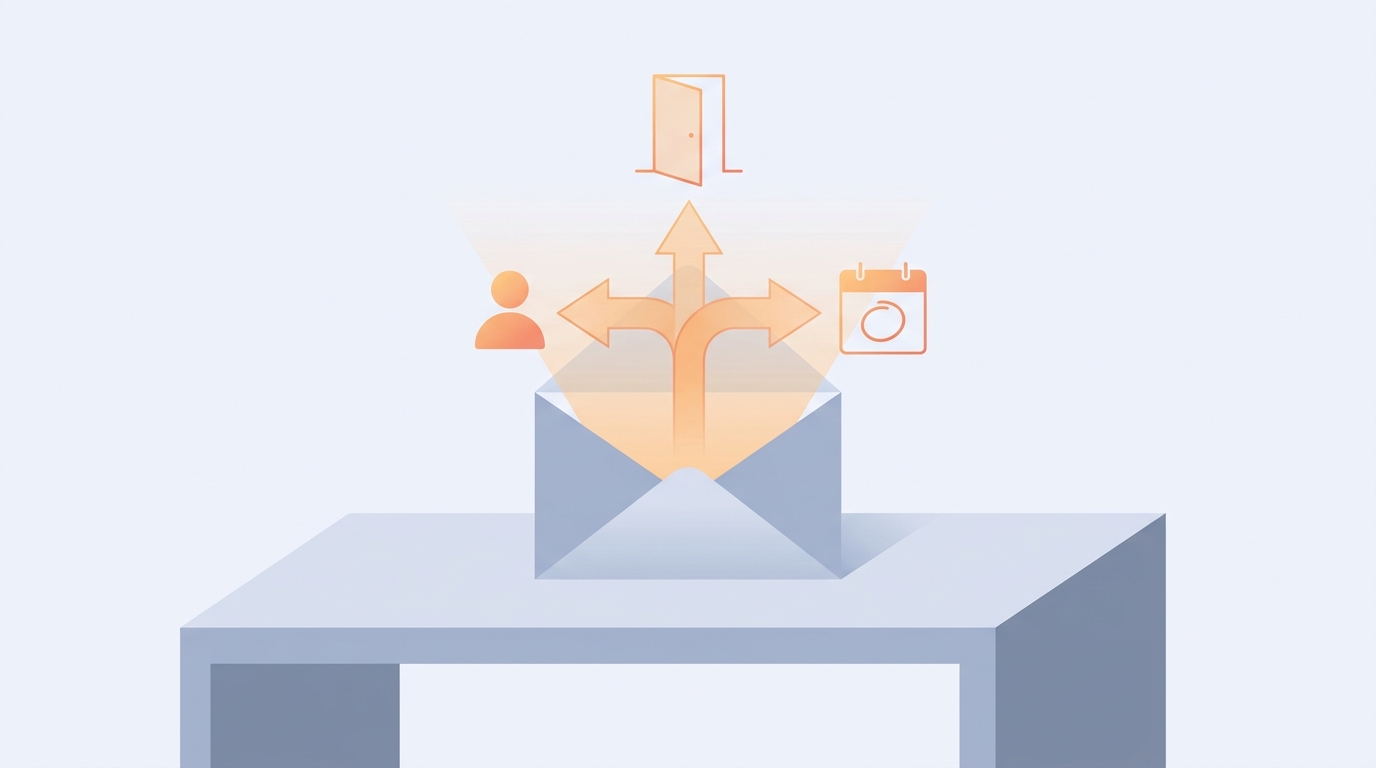
Then choose an action:
| What you find | Action |
|---|---|
| The account fits, the context is current, and you can clarify a real buyer question | Draft the follow-up. |
| The original email leaves the relevance unclear | Repair that explanation before adding another ask. |
| The source is stale or the person's role is uncertain | Pause the message and check the research. |
| The person replied, opted out, or entered a conversation with your team | Stop the unanswered sequence and handle the appropriate next action. |
| Your planned sequence has ended without a reply | Record the result as unanswered and close the sequence. |
Silence leaves the buyer's intent unknown. Record it that way. Do not turn an unanswered message into evidence that the company has budget, needs more persuasion, or wants you to contact everyone in the department.
A short reminder can still be reasonable when the original question remains specific and current. You do not need to manufacture a new insight for every message. A useful clarification may be enough. The test is whether the buyer has something clear to assess when they read the thread.
Four B2B follow-up examples, with the reasoning exposed
The following messages are illustrative examples. The companies, circumstances, and draft messages are hypothetical. Replace placeholders with verified facts and resources you can provide. They are not customer results or templates proven to produce a particular reply rate.
1. Clarify what your service would screen
Suppose you sell employee-placement services. Your first email mentioned an open role but gave the hiring team little detail about your screening process.
A weak follow-up repeats the meeting request:
Hi [Name], checking whether you had time to consider a call about your hiring needs.
Name the screening work instead:
Hi [Name], your [role] listing names [skill] as a requirement. We can screen candidates for that skill, [location requirement], and [availability window] before making introductions. Does your team use external placement support for this role?
Use this only if the listing supports the stated requirement and your service can perform those checks. The message explains the proposed work and asks about provider fit. It does not claim that the company is struggling to hire or that you already have available candidates.
If those screening details were already clear in the first email, repeating them adds little. Choose a different useful clarification or keep the reminder brief.
2. Supply evidence for a claim you already made
Suppose you sell a carbon project and your first email described its characteristics. You have an approved project document that explains the specific point relevant to this buyer.
This follow-up leaves the evidence unspecified:
Following up on our project. I think it would be a great fit for your sustainability goals.
Link the record that supports the claim:
Hi [Name], here is the [approved project document] for the project I mentioned: [link]. The section on [specific criterion] explains [narrow, supported point]. If your team is reviewing projects against that criterion, would the underlying records help your assessment?
The document must exist, be appropriate to share, and support the exact point in the message. Keep uncertainty about the buyer's current requirements visible. A public record of an earlier purchase does not establish that this project meets the next requirement.
You can send an existing, relevant document without inventing a new case study for each account. Check that its dates, claims, and permissions still fit the use.
3. Reduce the work needed to assess the offer
Suppose you sell an energy-assessment service to businesses. Your first message asked for a meeting before explaining which sites the service covers.
Repeating the same commitment gives the buyer another meeting decision:
Could you spare thirty minutes for a demo this week?
Let the buyer check service fit first:
Hi [Name], a useful first check for our assessment is whether the site meets [location] and [facility-type] criteria. Your team can review those criteria here: [approved scope page]. If the site falls outside them, we can rule it out before arranging a call.
The scope page must describe your actual service. Avoid adding arbitrary criteria to make the email sound specific. This version gives the buyer a way to assess relevance without first agreeing to a meeting.
Gong's cold-outreach follow-up example similarly asks about interest before asking for meeting time. That is a possible next action, not a requirement for every B2B message. Choose an ask that fits what the buyer can reasonably decide from the information you provided.
4. End the sequence without asking for reassurance
If the planned sequence is complete, a closing note can state what you will do:
Hi [Name], I'll stop this sequence here. The [specific resource] remains available at [link] if [business question] becomes relevant. You can reply to this thread if you want to discuss it later.
Send that note only if it helps the recipient and you will stop. Ending the sequence without another email is also an option. Do not use a closing message to make the buyer reassure you, explain their silence, or take responsibility for your pipeline.
Record the stopping point so another operator or campaign does not restart the same outreach without checking its history.
Choose timing and stopping rules before launch
Treat timing as an operating decision for the campaign. Record the first follow-up date, the maximum planned touches, and the date when someone will review the sequence. Base that plan on the offer, the reason for contacting the account, and the time available to assess responses.
A deadline can justify a particular date only when it is real and relevant. Do not manufacture urgency because the campaign needs another touch. Recheck time-sensitive sources before a delayed send.
Published guides offer starting points rather than a universal answer. Woodpecker's guide recommends relatively short follow-ups, while Gong's cold-outreach example argues for a longer message. Those recommendations do not establish the right word count or interval for your specific offer.
Review replies from the intended business buyers, their stated reasons, and the next actions those conversations support. Keep booked meetings, held meetings, and sales-qualified outcomes separate. If the campaign is quiet, investigate delivery, account selection, and relevance before extending it.
Write down the stopping rules as part of the plan:
- Stop the unanswered sequence when a person replies. Review the reply before choosing the next action.
- Honor a request to stop across the campaigns you control.
- Pause a contact when the address fails or the supporting research no longer fits.
- Check account-level history when another person at the company is already speaking with your team.
- Close the sequence when its agreed limit is reached. Require a reviewed reason before a later approach.
An automated out-of-office message needs its own review. It does not establish buying interest. Record any relevant return date and decide whether the planned message should wait.
Give an AI BDR evidence and an owner
Before an AI BDR drafts the next message, give it the approved seller claims, the account evidence, and the campaign history. Keep the source beside each account-specific statement. Mark an inference as an inference; do not let a plausible explanation become a fact about the buyer.
Inspect a sample of selected accounts and draft messages before sending. Reject a follow-up that invents a buying project, claims unavailable proof, or repeats an offer the company has already declined. Review changed segments and unusual cases again when the campaign evolves.
Check the actual automation settings too. HubSpot's sequence documentation says reply and meeting unenrollment triggers can be switched off. It also explains that automated out-of-office replies do not always cause unenrollment. Do not assume a tool's default state implements your stopping policy.
For low-volume B2B outreach where reputation takes priority, our recommendation is to handle the work manually when you can review each account and message yourself. Include that review time in the cost. Automation becomes useful when you have a repeatable task, reliable inputs, and someone accountable for exceptions.
Keep follow-up decisions with the account history. In Quantonica's pilot workflow, your feedback helps shape the outreach, and your team takes over when a buyer replies.
Review the next message waiting to send. Keep it on hold until you can name the useful information and the stopping condition.