The AI BDR Rebirth: What Changes in 2026 and Beyond
Estimated reading time: 14 minutes
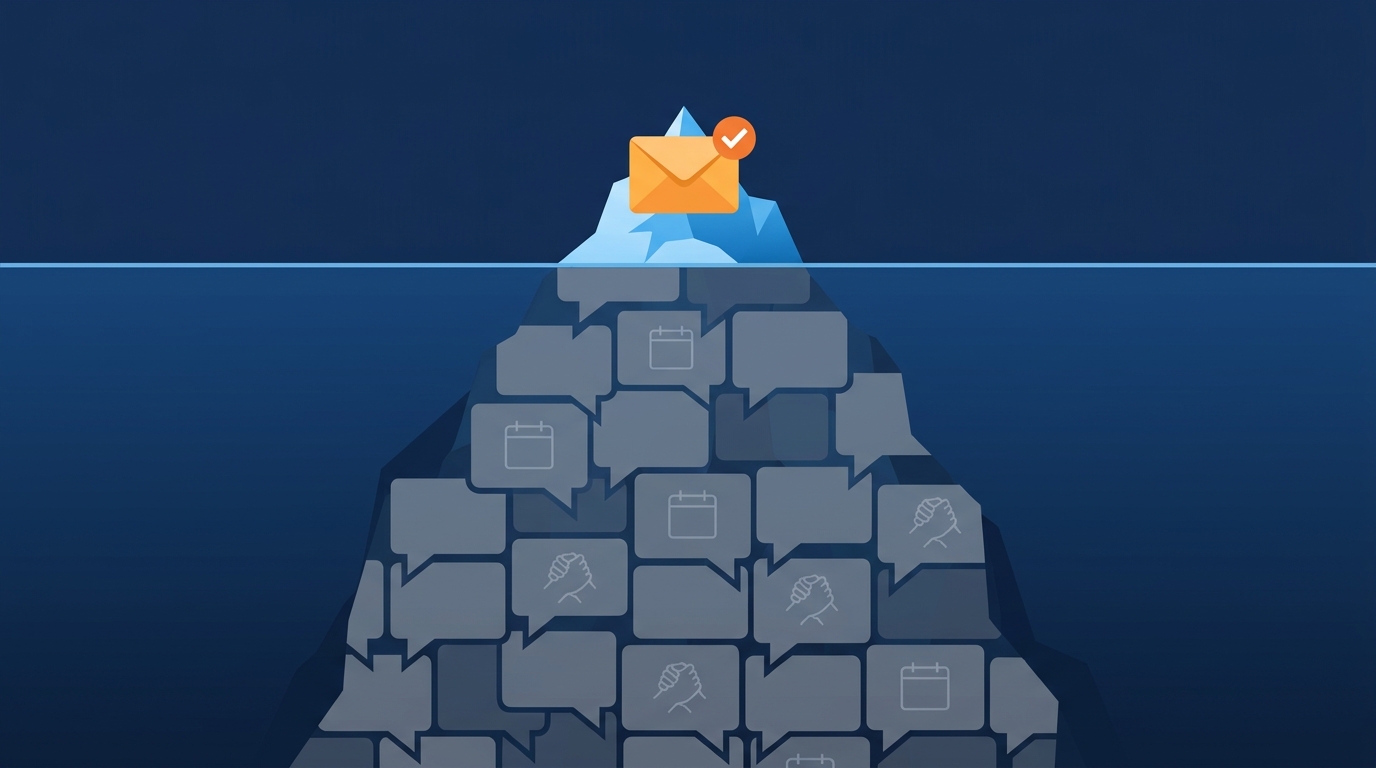
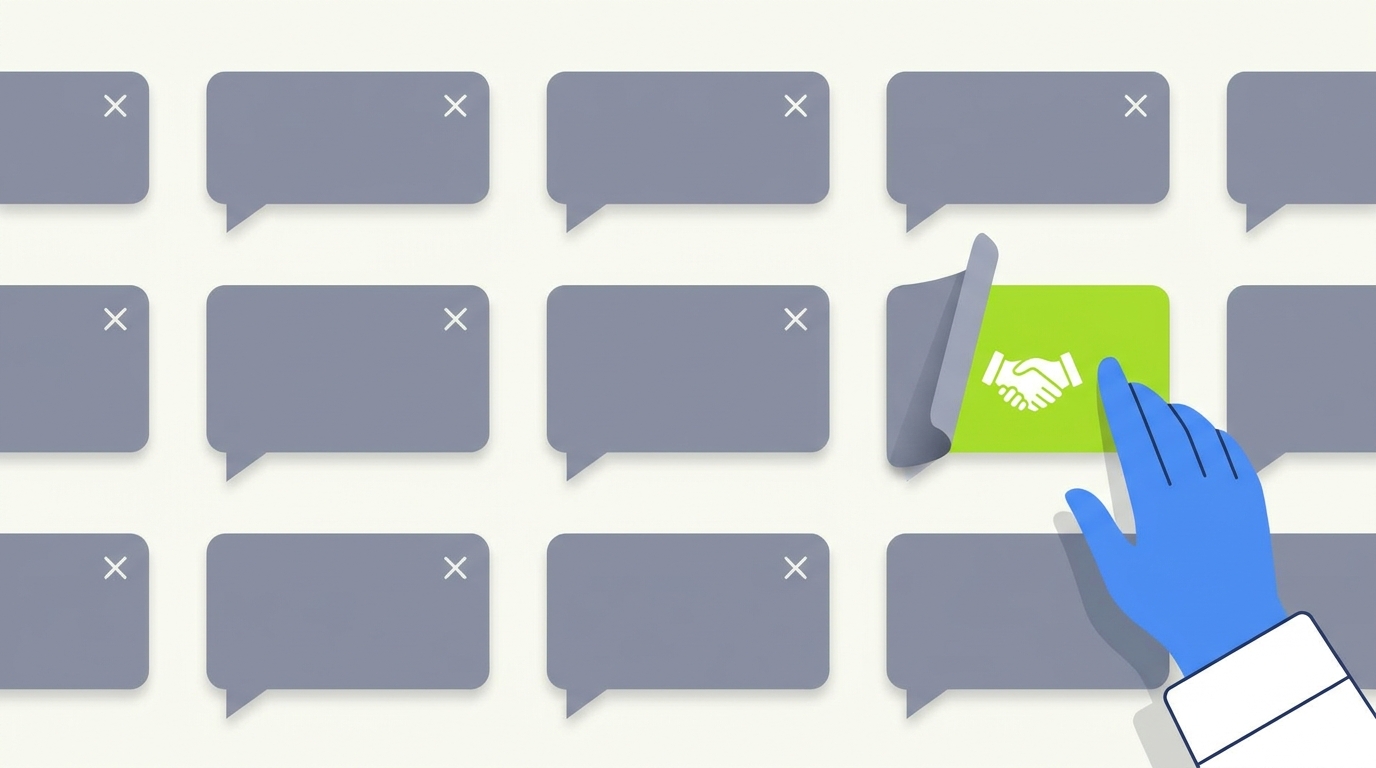
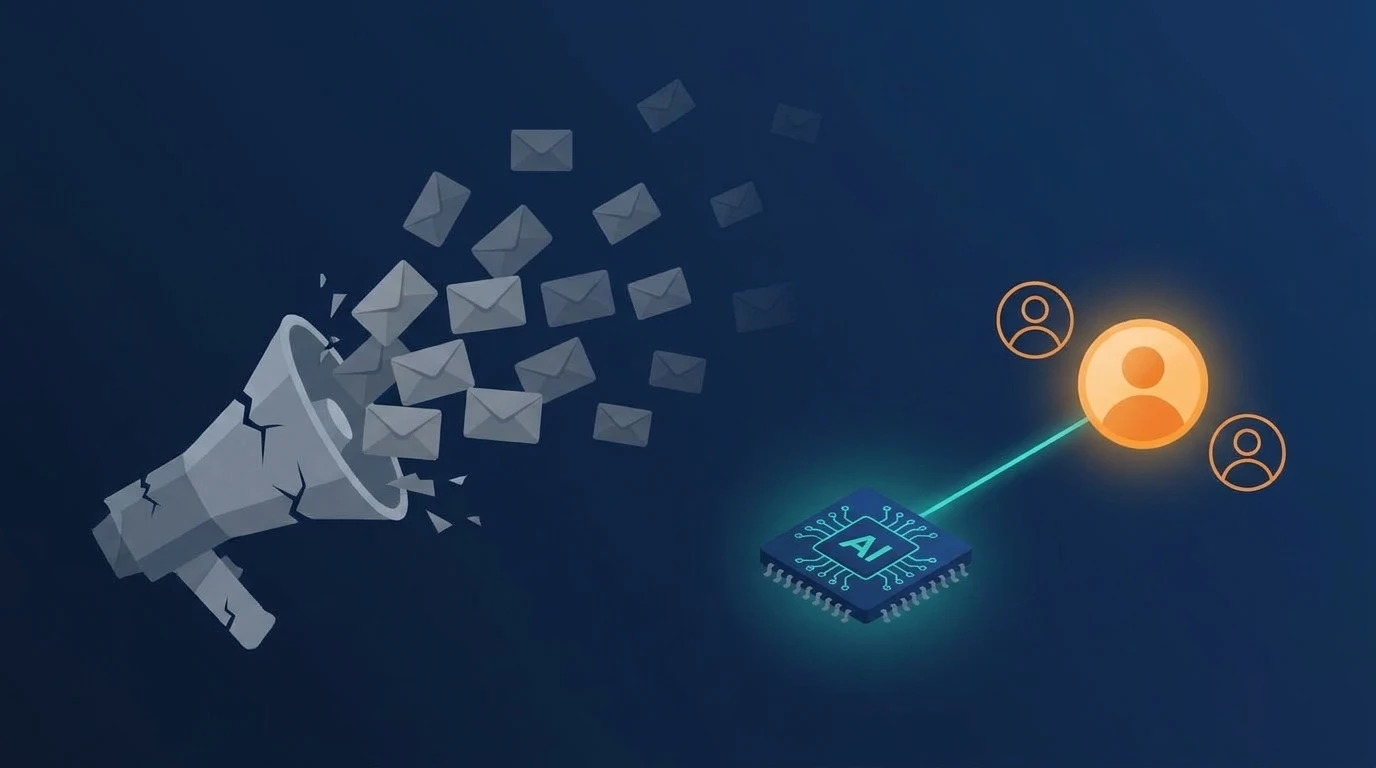
The first AI BDRs arrived about two years before the technology could carry them. They promised a full sales development team in a browser tab, booked meetings on autopilot, and "stop hiring humans." What most buyers got was more email. Generic, confident, slightly off, and sent at a volume no human team would have dared. Prospects learned to spot it in the first line, and the category picked up a nickname it still hasn't shaken: spam 2.0.
We started building our own AI BDR as that wave was cresting, at the moment agents and much stronger models were becoming normal tools. We built it for a single industry, sustainability, and we ran it ourselves, close to every client, with a human operator in the loop on every campaign. That combination taught us what the first wave missed. The idea was sound. The order of operations was backwards.
This post is the argument for a second generation, and the five things it has to get right.
How the first wave earned the name
The cleanest summary of the first wave is a trial. In early 2025, ZoomInfo tested 11x, one of the best-funded AI SDR startups, for a month. A ZoomInfo spokesperson told TechCrunch the product "performed significantly worse than our SDR employees," and the company threatened legal action when 11x kept its logo on the website. Three current and former 11x workers told the same reporters that most early customers used break clauses to leave.
That story is one company. The pattern behind it is wider. Gartner expects over 40% of agentic AI projects to be canceled by the end of 2027, citing "escalating costs, unclear business value or inadequate risk controls," and estimates that only about 130 of the thousands of vendors calling their products agents actually build them. That forecast covers agentic AI broadly, beyond sales. Gartner's sales practice is more direct: by 2028, AI agents will outnumber sellers ten to one, and fewer than 40% of sellers will say those agents made them more productive. "AI agents are everywhere," said Gartner VP Analyst Melissa Hilbert, "but there's a value ceiling."
The first wave hit that ceiling for a simple reason. It used AI to make outreach cheaper, then spent the savings on more outreach. Cheaper per email, worse per conversation.
The real AI BDR benchmark is lower than you've been told
AI SDR vendors publish reply-rate benchmarks of 4% and up. Those numbers come from the companies selling the tool, usually measured against opens or accepted connections, and usually from their best accounts.
Our clients' numbers looked nothing like that. Most of the teams we work with ran a first-wave AI BDR before they came to us. Across those campaigns, the averages we saw were about 0.8% on email and 3% on LinkedIn, measured on total sends. Abysmal was the word they used.
Human-run outbound isn't doing much better, which is part of the problem. Belkins, an agency whose SDRs run campaigns by hand, counted every reply across 7,530,489 cold emails sent in 2025: 0.45%. That's unique replies divided by emails sent, with auto-replies and bounces stripped out. It gets worse up-market. Companies with more than 10,000 employees replied at 0.22%, and VPs at 0.32%. On LinkedIn, Expandi's 2026 benchmark across 13.2 million automated connection requests puts the average reply to a connection note at 3.0%, sliding from 3.5% in May 2025 to 2.2% by April 2026.
So the first wave of AI BDRs landed at roughly the human average, at many times the volume. And in a complex market, the average can mean zero deals.
Run the arithmetic on an enterprise list. At 0.8%, a thousand emails gets you eight replies; at the enterprise rate Belkins measured, two. Roughly three of every four human replies are some form of no, so that's somewhere between half a positive conversation and two. In a market where 6sense puts the average buying cycle at 10.1 months, a couple of conversations per thousand sends is a rounding error with a domain-reputation cost attached.
So we set the bar somewhere else: the output of a diligent, motivated BDR on a focused week. Someone who reads the annual report before writing, finds the right three people, and follows up like they mean it. Across our clients' campaigns that bar looks like 3 to 7% on email and 14 to 22% on LinkedIn, on total sends. Treat 0.8% and 3% as the floor you're trying to get far away from.
Why we built it in one of the hardest markets of 2026
We picked sustainability before anyone knew how rough 2025 and 2026 would get for it. Selling carbon accounting software, renewable power deals, carbon credits, or ESG advisory right now means selling into a market that is being regulated down, politically targeted, and quietly defunded, all at once.
In Europe, the Omnibus package rewrote the rules. The Commission's proposal aimed to remove around 80% of companies from the scope of the Corporate Sustainability Reporting Directive. The final directive, signed off in February 2026, limits CSRD to companies with more than 1,000 employees and over €450 million in turnover, and the due diligence directive to companies with more than 5,000 employees and €1.5 billion. In the US, the SEC stopped defending its climate disclosure rule in March 2025 and proposed rescinding it entirely in May 2026. The One Big Beautiful Bill Act cut wind and solar tax credits for most projects placed in service after 2027. Between 2020 and 2026, 40 states enacted 155 ESG-related bills, 118 of them opposing ESG investing.
The coalitions went too. The Net-Zero Banking Alliance voted to wind itself up in October 2025. Global sustainable funds saw $84 billion in net outflows in 2025, after $38 billion of inflows the year before. The voluntary carbon market's value fell 29% in 2024, to $535 million.
Demand hasn't vanished, though. Corporations still signed 55.9 GW of clean power deals in 2025, the second-highest year on record, with a record 29.5 GW in the US. Sustainable funds swung back to $3.7 billion of inflows in Q2 2026. California's emissions reporting law kept its first deadline. But the shape of demand changed. Fewer companies are compelled to buy, and the ones that still buy do it with more scrutiny, longer approvals, and less patience for vendors who don't understand their situation.
That is the market where a spray-and-pray AI BDR fails fastest. It also made us build the parts that matter.
1. Research agents fed with industry-specific sources
Generic AI BDRs research from the same contact databases everyone else uses. That gives you firmographics: industry, headcount, title. It tells you what a company is. Whether it is buying this year is a different question, and in sustainability the answer is rarely on LinkedIn. It sits in sustainability reports that run to hundreds of pages, climate disclosures, and ESG pages buried three clicks deep in a corporate site that almost nobody visits.
Here's a real one. AXA XL's Climate Report 2025 runs 68 pages. Deep in the Scope 3 discussion, it says the company began using a third-party platform in 2025 to measure emissions from purchased goods and services and collect data from suppliers, and that this now feeds the group's CSRD reporting. Then one line: "In 2026, we intend to replicate this approach with our insurance-related vendors."
That sentence is a buying signal. It names a program, a year, and a new population of suppliers who are about to be asked for emissions data. If you sell supplier engagement, Scope 3 data collection, or carbon accounting to insurance service providers, it tells you who to call and what to say. No intent-data feed surfaces it, because nobody is searching for it. It sits in a PDF most people will never open.
A research agent that reads those documents, pointed at the sources a sector actually publishes in (registries, target dashboards, disclosure platforms, sustainability reports), does two things a database can't. It qualifies accounts on evidence instead of proxies, and it finds demand before the market notices it. We've written about which signals still predict replies and where the best target lists hide in public records. The short version: build the research layer around your industry's documents, then point the agents at them.
2. Map the buying committee, then write to each person
In a complex B2B sale, a single contact is a single point of failure. Forrester's 2026 State of Business Buying counts 13 internal stakeholders and nine external influencers in a typical decision. Gartner's buyer research puts buying groups at five to 16 people across up to four functions, and found unhealthy conflict in 74% of buyer teams. In sustainability, a carbon accounting purchase can run through the head of sustainability, the CFO's reporting team, procurement, IT, and an external auditor, each with a different reason to say no.
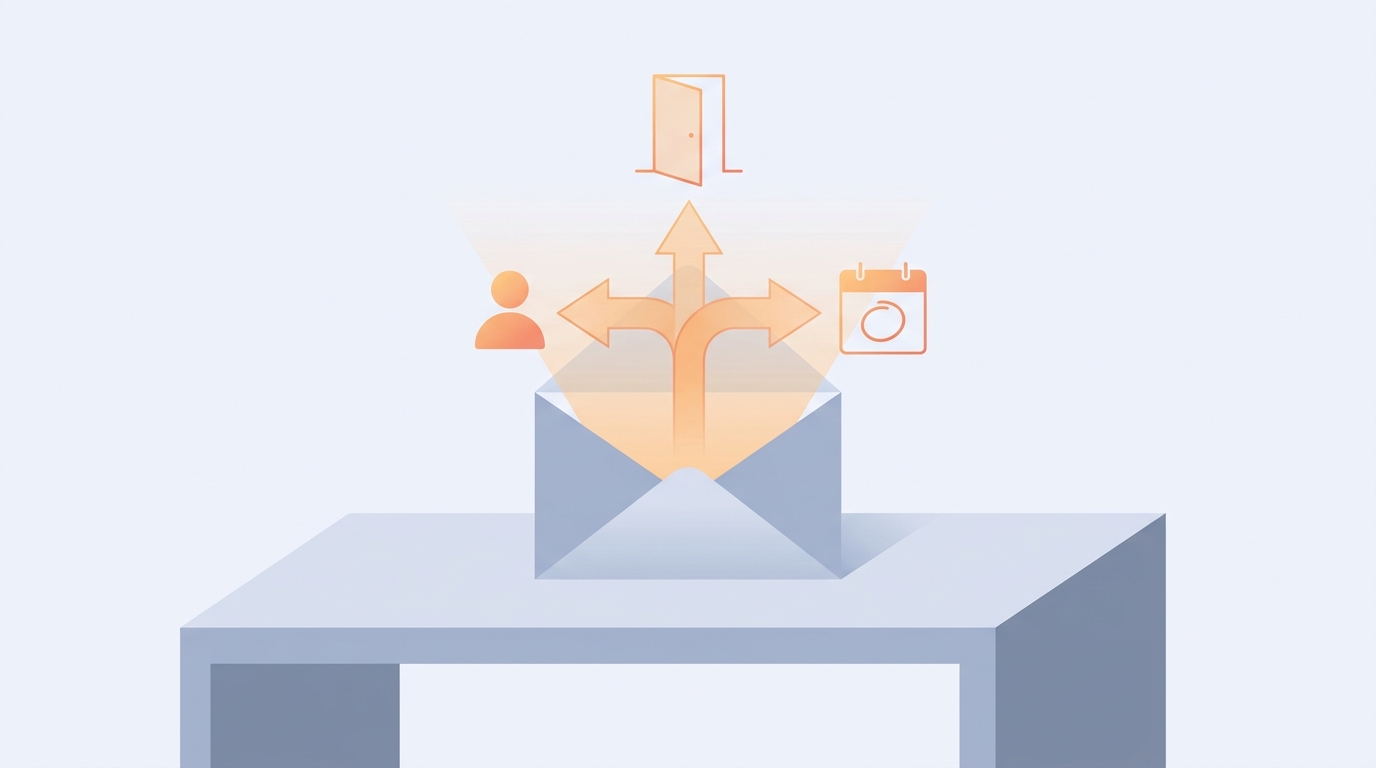
The first wave sent the same email to the most senior title it could find. The second wave maps the committee first. That means identifying the person who owns the problem, the person who owns the budget, and the person whose workload changes. Then it writes to each of them about their part of the problem. The head of sustainability hears about the audit trail for assurance. The finance lead hears about the cost of rebuilding the inventory every year in spreadsheets. Same account, same evidence, different message.
There's a second reason to go wide. People leave. The median US worker has been with their employer 4.1 years, according to the BLS's 2026 tenure release, and UserGems estimates about 20% of the contacts in a CRM will change jobs in the next year. On a ten-month buying cycle, that's a real chance your only contact is gone before the deal closes. We aim for at least two engaged people per account, so a departure leaves a thread to pull instead of a dead opportunity.
3. Copy that doesn't read like AI
AI-sounding copy isn't going to fix itself as models improve. Models are trained to sound helpful, balanced, and fluent, which in an inbox reads as a stranger trying too hard. Readers punish it once they notice. In a Stanford study of AI-mediated writing, people trusted AI-written profiles as much as human ones until they were told some were AI-written. After that, trust fell for any profile that read as formulaic or odd.
There's a useful data point in Belkins' LinkedIn study. AI-assisted campaigns replied at 7.3%, and campaigns without AI at 7.0%. AI barely moved the number either way. The damage comes from AI left to its defaults.
Three things moved our numbers:
- Constrain the model. Hard rules on length, structure, and banned phrasing, plus a reviewer pass that rejects drafts which sound like a model. Stripping em dashes and words like "delve" is table stakes. The harder part is rhythm, restraint, and knowing what a person would never bother to say.
- Use models that are good at writing. Model choice matters more for copy than for research. Some models reason well and write like a press release. Test them on your own messages and pick by reply rate, not by benchmark.
- Write your positioning down first. A one-page document covering who you are, what you'd never claim, how you talk, and the words your buyers use. Every draft gets checked against it. If your brand is plainspoken and technical, the emails have to be too, or the first call feels like a different company.
4. Infrastructure is where cheap AI BDRs cut corners
Sending infrastructure is complex to build and boring to maintain, so it's where low-cost AI BDRs save money. Usually that shows up as too few mailboxes pushing too much volume, new domains that were never warmed, and nobody watching placement until replies stop.
The rules got stricter. Google tells bulk senders to keep the user-reported spam rate under 0.1% and never reach 0.3%, and in November 2025 Gmail started ramping up enforcement on non-compliant traffic. Since May 2025, Microsoft's Outlook.com rejects mail from high-volume senders that fail SPF, DKIM, and DMARC outright, with a 550 error, where it used to land in junk. A burned domain takes weeks to damage and quarters to recover.
LinkedIn is riskier still. LinkedIn's help pages state it doesn't permit third-party software, including bots and browser plug-ins, that automates activity, and that an excessive number of invitations combined with suspected automation can get an account suspended or restricted. In March 2025, the LinkedIn company pages of Apollo.io and Seamless.ai disappeared without public explanation. If your AI BDR runs your executives' LinkedIn accounts through cheap automation, the downside is losing the account your best relationships live on.
The second-generation answer is unglamorous: enough mailboxes to keep per-inbox volume low, weeks of warming before the first campaign, daily monitoring of placement and complaints, and LinkedIn activity paced like a person. Our AI BDR evaluation checklist has the specific questions to ask a vendor.
5. Run it like an experiment, and protect your TAM
The first wave treated outbound like a machine: load a list, press start. The second treats it like a lab. Every campaign gets tracked by signal, segment, angle, and persona, so you can see what actually moved the positive-reply rate. Then you double down on what works, retire what doesn't, and keep a slice of volume for new motions.
The constraint underneath all of it is your addressable market. In a niche, you may have a few thousand accounts, and every bad email spends a little of your reputation with them. Burning through a list at low quality wastes it and closes doors for a year. So we keep volume deliberately low and prefer fifty well-researched contacts to a thousand thin ones. Why generic AI BDRs fail in small markets covers the math, and what to do with the replies you do get covers the other half.
What AI BDR 2.0 actually looks like
Put the five pieces together and the shape of the second generation is clear. It's a custom, high-quality stack: industry research agents, committee mapping, constrained copy, real sending infrastructure, and campaign analytics. Technical operators run it alongside the sales team. The operators tune the system. The sales team owns the conversations and feeds back what buyers actually say.
In steady state, a mature system can take a list of companies and return replies. That stage comes after many rounds of experiments, and it only covers cold outreach. A real business needs outbound for much more:
- Reviving cold leads. Closed-lost deals and stalled opportunities, re-approached when a new signal appears.
- Booking meetings at conferences. Researching attendees and exhibitors weeks ahead, so the floor time goes to people who already said yes.
- Launching campaigns for a product or an event. A new offer, a webinar, a regulatory deadline, each with its own list and its own angle.
- Following people who change jobs. A former champion at a new company is a warm account.
Each of those motions needs the same research depth, the same qualification, and the same infrastructure. A vendor that does only cold outreach to cold lists sells you one motion out of five.
The new bar
The first generation set the bar at "sends a lot of email cheaply." That's why it ended up being called spam. The bar for the second generation is the BDR every sales leader wishes they could hire more of: diligent, curious, specific, and persistent without being annoying. Today's tools can meet that bar consistently, as long as someone builds them for your market and stays in the loop to run them.
That's what we do at Quantonica, and what we built Emitree to do for sustainability companies. The first wave averaged 0.8%. Your outreach can do much better.
FAQ
What reply rate should you expect from an AI BDR?
Vendors quote 4% and up. Across the campaigns our clients ran with first-wave AI BDRs, we saw about 0.8% on email and 3% on LinkedIn, on total sends. A well-run second-generation system should reach the level of a diligent human BDR: in our clients' campaigns, 3 to 7% on email and 14 to 22% on LinkedIn.
What is the average cold email reply rate in 2026?
The most conservative large-sample figure is Belkins' 0.45%, measured across 7.5 million human-run cold emails sent in 2025 as unique replies divided by total sends. Enterprise accounts replied at 0.22%. On LinkedIn, Expandi puts the average reply to a connection note at 3.0% across 13.2 million requests.
Why did the first AI BDRs fail?
They shipped before models and agents were good enough. They optimized for volume over research, and they ran on cheap sending infrastructure. Buyers saw generic messages at scale and filed the whole category under spam.
What should an AI BDR do differently in 2026?
Research accounts from industry-specific sources, map and message the full buying committee, constrain copy to your brand voice, run on monitored and warmed infrastructure, and keep technical operators in the loop who test, measure, and protect your addressable market.
Sources
- Belkins - B2B cold email response rates, 2026 study: 0.45% reply rate across 7.5M human-run emails sent in 2025, enterprise and VP rates
- Expandi - LinkedIn Outreach Benchmarks 2026: 3.0% connection-note reply rate across 13.2M requests and the decline to 2.2%
- Belkins - LinkedIn B2B outreach statistics, 2026 study: AI-assisted vs non-AI LinkedIn reply rates
- TechCrunch - 11x has been claiming customers it doesn't have: the ZoomInfo trial and customer churn reports
- TechCrunch - Artisan raises $25M: the "stop hiring humans" campaign
- Gartner - Over 40% of agentic AI projects will be canceled by end of 2027: cancellation forecast and agent washing
- Gartner - AI agents will outnumber sellers by 10x by 2028: seller productivity forecast
- 6sense - 2025 Buyer Experience Report: 10.1-month average buying cycle
- Council of the EU - Simplification of sustainability reporting and due diligence: final CSRD and CSDDD thresholds
- European Commission - Omnibus package: proposal to remove around 80% of companies from CSRD scope
- SEC - Proposed rescission of climate disclosure rules: May 2026 proposal
- Sidley - The One Big Beautiful Bill Act and the energy landscape: wind and solar credit phase-out
- Ballotpedia - Enacted state ESG legislation: 155 ESG bills across 40 states, 2020-2026
- Reuters - Net-Zero Banking Alliance to stop operations: October 2025 wind-up vote
- Morningstar - ESG funds close 2025 with continued outflows: $84B in 2025 outflows
- Morningstar - Global ESG flows: Q2 2026 inflows
- Ecosystem Marketplace - State of the Voluntary Carbon Market 2025: 2024 market value
- BloombergNEF - Corporate clean energy buying in 2025: 55.9 GW of deals
- AXA XL - Climate Report 2025: the Scope 3 supplier program and the 2026 vendor expansion
- Forrester - The State of Business Buying, 2026: 13 internal stakeholders and nine external influencers
- Gartner - 74% of B2B buyer teams show unhealthy conflict: buying groups of five to 16 people
- BLS - Employee Tenure in 2026: 4.1-year median tenure
- UserGems - Champion tracking: share of CRM contacts changing jobs each year
- Stanford HAI - When AI writes your email: trust in AI-mediated writing
- Google - Email sender guidelines FAQ: spam-rate thresholds and November 2025 enforcement
- Microsoft - Outlook's new requirements for high-volume senders: May 2025 rejection policy
- LinkedIn - Prohibited software and extensions: automation policy
- MarTech - Two lead-gen providers disappeared from LinkedIn: Apollo.io and Seamless.ai pages removed, March 2025