The most effective cold outreach playbook in 2026
Estimated reading time: 10 minutes
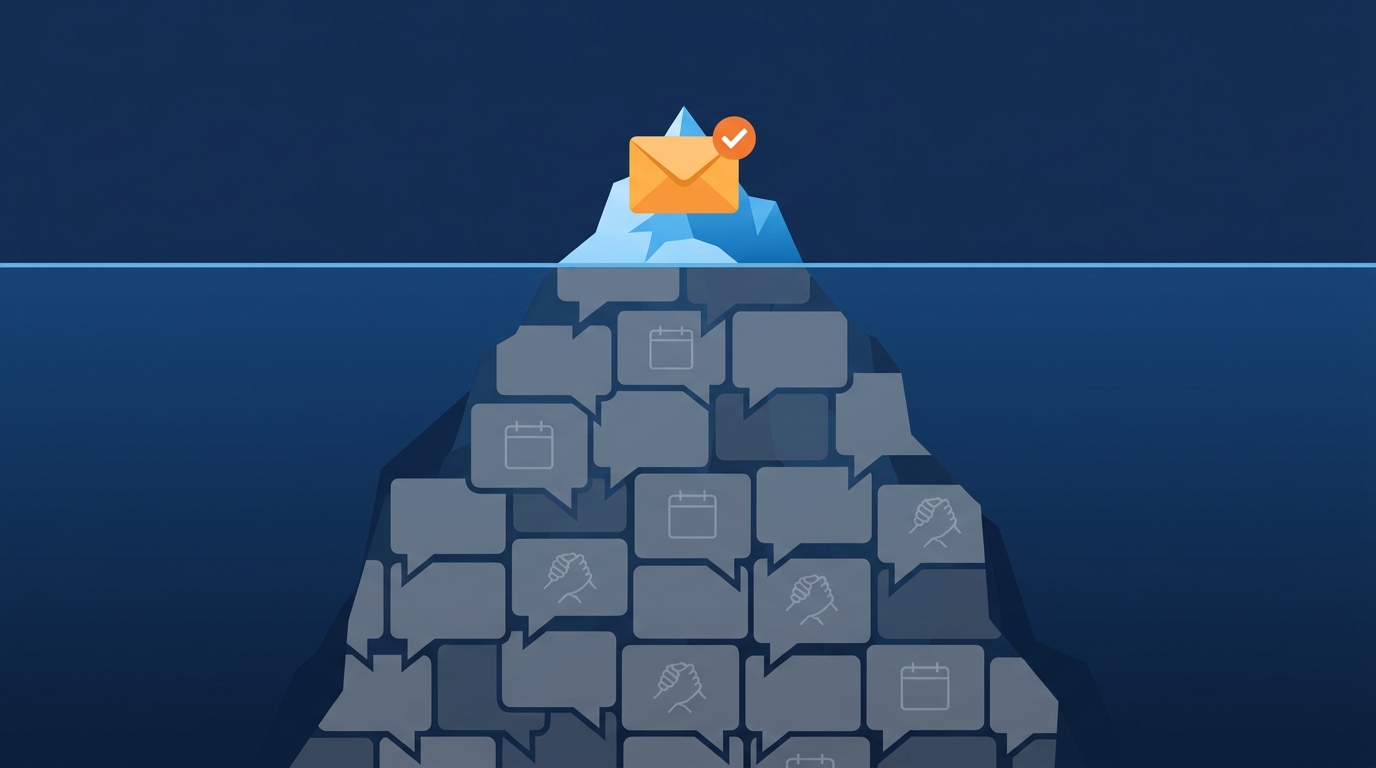
The first instinct when a cold email campaign isn't working is to rewrite the email. Better hook, tighter CTA, sharper subject line. That fix works some of the time. Most of the time, the bigger constraint sits earlier in the funnel, in who ended up on the list at all. Across our and our clients' campaigns, this targeted approach lands at 3 to 7% email reply rates and 16 to 22% on LinkedIn. The industry average reported across surveyed senders sits under 1%.
The difference comes from who's on the receiving end and whether they were going to do something about this problem anyway. Sub-50-contact campaigns consistently outperform blasts over 1,000 contacts by 2-3x, because the smaller list permits the depth of research that earns the reply.
What follows is a synthesis of three frameworks that, taken together, cover the targeting, the angle, and the writing of cold outreach. Sequencing and follow-up are real disciplines too, but they sit downstream of these three. If the first email is aimed at the wrong person or argues the wrong angle, no cadence rescues it.
Why most cold email fails
The default founder mistake is describing the product to people who don't have an active problem. Rob Snyder's reframe in The Physics of Startups: demand is supply-agnostic. What people actually pay for is the underlying outcome. Organized sales data. Pipeline that arrives without manual sourcing. Customer retention. The product category that delivers it sits downstream of that desire.
This inverts the writing task. The job is to find blocked demand that already exists and signal you're the unlock. When you write to that signal, response rates jump because the prospect was going to take action anyway. You just made yourself the obvious next step.
Persuasion is the wrong frame for cold email. If a prospect needs convincing they have a problem, the timing is off. Move on and revisit next quarter.
The four conditions that make a prospect addressable
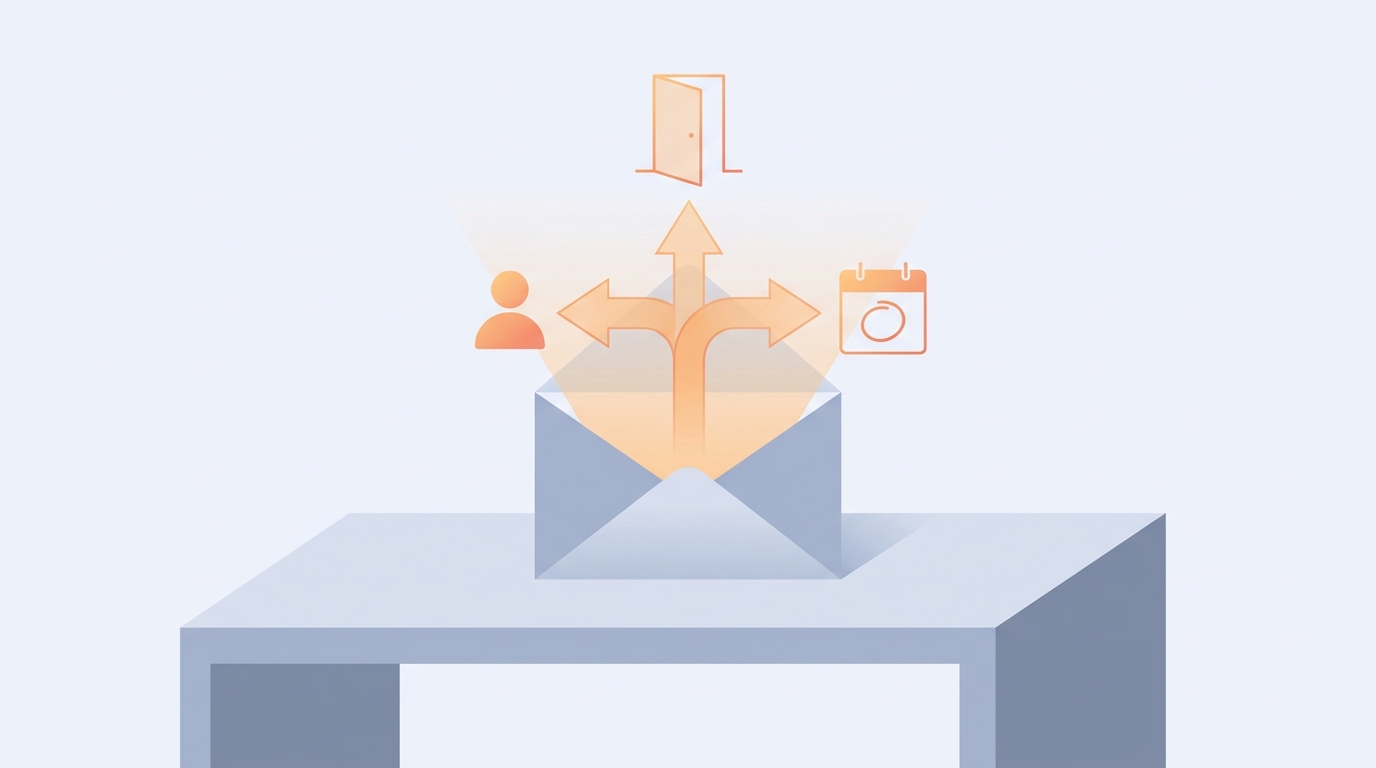
Snyder's PULL framework is a four-condition test for whether anyone is actually reachable right now. All four conditions need to be true at the same time.
The first condition is project. A specific initiative on the buyer's to-do list this quarter, with a named owner. The threshold is concrete enough that "by when?" would get an actual answer. "We're moving to HubSpot by Q3" passes. Aspirations and backlog items don't reach the priority list.
The second is urgency. An external forcing function makes deprioritizing hard: new regulation, a board commitment, a customer churning, a competitor launching, a deadline already announced. If it would be strange not to address this now, the condition is met.
Third, a list of options. They're already evaluating something, whether that's competitors, an in-house build, a hire, or a different category of tool. If they aren't considering anything yet, the timing is too early.
Fourth, limitations. The existing options have flaws severe enough that progress is blocked. The messaging should name the specific gap in what they've already tried.
| PULL component | What it becomes in the email |
|---|---|
| Project | The signal you cite: job posting, recent announcement, hire, fundraise, regulatory filing |
| Urgency | Why-now language: "given X deadline" or "ahead of [event]" |
| List of options | Implicit reference to what they're probably already trying ("most teams I see are stitching together X and Y") |
| Limitations | The hook of the value prop: name the specific flaw in those existing options |
When you finally get someone on a call, the single best diagnostic question is: "What was happening the week before you took this call?" The answer tells you whether real PULL exists. A vague reply ("oh, I just thought it sounded interesting") means there's no underlying project. They were curious. When you hear a specific trigger ("our board reviewed our ESG numbers and asked why we're behind"), the PULL is real and you can sell directly.
Where angles actually come from
PULL tells you who is reachable. It doesn't tell you what to say. That's the angle.
The first time we ran parallel angle tests for a sustainability client, the gap between the worst and best-performing angle on the same segment was wider than any copy edit we'd ever made within a single angle. Same persona, same product, same week sent. The angle decided everything.
That's why the angle is the lever. Three different angles to the same persona can produce 1%, 4%, and 12% reply rates. Most teams get it wrong because they generate angles internally, in a Notion doc, from intuitions about what should hurt the buyer. The market then tells them, expensively, that it doesn't.
Two practices keep angle generation grounded in what's actually happening.
Spend real time talking to clients
Three pools of conversation are worth structuring time around:
- Recent closed customers. Ask what the trigger was. What was on their plate the week before they took your call. Which alternatives they were comparing. Which line in your outreach made them open it. The language they use to describe the problem is the language that gets future buyers to open the next email.
- Prospects mid-cycle. Sit in on discovery calls. Note the exact phrasing of their pain. The metaphors. The verbs. Whether they describe the problem as a time issue, a quality issue, a cost issue, or a confidence issue.
- Prospects who said no. The most underused source. A 10-minute conversation with someone who declined often reveals which angle they'd have engaged with, and which alternative they ended up choosing. Both are signal.
The pattern that emerges from 15 to 20 of these conversations is the angle inventory. Not a single best angle, but a small set of recurring themes that map to different buyer states.
Read what the market is reading
The other input is market news, read the way an investor reads it. Not for entertainment.
What to track depends on the vertical, but the structure is consistent. Regulatory changes that create new compliance work. Funding rounds that change a company's hiring or buying posture. Role transitions, especially Head of [Function] hires, because the new hire's 90-day plan is the most predictable source of project-level PULL. Partnership announcements, which usually come with a revenue target attached. Industry reports that frame the conversation buyers are already having.
The job is to read enough of this material that you can write back to a prospect in their own framing. The angles that resonate are usually the ones already circulating in the buyer's information environment, restated with one degree more specificity than they've seen elsewhere.
Then test in parallel
Once you have three to five angles drawn from client conversations and market news, run them as small parallel campaigns. 25 to 50 contacts each. Different angles, same persona, same segment. The market tells you which theory of pain was right. The reply-rate gap between angles is usually larger than the gap between any two competing copy edits within a single angle.
A reply rate above 10% on a small campaign is the signal that the segment-and-angle combination has fit. Below 5% on a clean test, the combination is wrong. The point of testing is to find that one combination, then scale it.
Show me you know me
Once the targeting and the angle are right, the writing has to do the rest. Sam McKenna's Show Me You Know Me framework reports 43% open rates and 20% reply rates against industry baselines of roughly 6% and 0.9%. The mechanic is simple. Hyper-personalize the opening so deeply that the prospect can't believe a human did the research, and don't pitch in email one.
The structure that works has seven elements.
- A subject line specific enough that it would confuse anyone except the intended recipient. "[Company] + [oddly specific other thing]" reads bizarre to outsiders, instantly clear to the recipient.
- Preview text that does real work in the first 60 to 80 characters visible on mobile, where McKenna's data puts 81% of opens. Two patterns: the formal "We've yet to be properly introduced, but I'm…" or the direct "I saw your post about X and…"
- A hook of two sentences that prove you did real research. A recent post, a recent hire, a public commitment, a conference talk. Specific enough that no other prospect could receive this email.
- A bridge to value: one sentence connecting what you noticed to what you do. Most outreach pitch-slaps at exactly this transition. Frame it as "this is why I'm reaching out" rather than launching into product description.
- A problem-focused value prop that names the specific problem in the prospect's language. Pre-empt the obvious objection: "I know you've probably looked at X already, but [specific limitation]."
- A respectful CTA: one question or one specific time proposal. No calendar link in email one. Something like: "Do you have time over the next week or two? Happy to send a calendar invite."
- A real human signature. Short. No marketing graphics or banners that flag the email as automated.
Hyper-personalize the opening. Keep everything after it reusable. The same opening gets re-surfaced in follow-ups without re-researching.
The anatomy of an email under 75 words
Pulling targeting, angle, and writing together, the structure that consistently works:
SUBJECT: [Specific, personal, no value prop]

[Personalized observation, 1 sentence]
[Bridge to why you're reaching out, 1 sentence]
[Specific problem in their language, pre-empting objection, 1-2 sentences]
[One specific CTA, 1 sentence]

[Signature]
Under 75 words. Anything longer either repeats itself or pitches when it shouldn't. The discipline of cutting to 75 words forces every sentence to do real work.
Subject line patterns that earn the open:
- Question form: "Quick question on [their recent thing]?"
- Curiosity gap: "[Their company] + [oddly specific other thing]"
- Reference form: "Re: [their post / their announcement]"
- One-word personal: their first name only, in lowercase.
What to avoid: anything that reads like marketing copy. "Save 30% on…", "Boost your…", "The #1 way to…" These get filtered before they're seen.
CTA patterns, ranked by what produces replies:
- Specific time and reason ("Worth 20 minutes Thursday or Friday to compare notes on [X]?")
- Single question ("Is [problem] something you're solving for right now?")
- Permission to send something ("Can I send a 1-pager?")
- "Worth a conversation?" Light, reversible, low commitment.
- Calendar link. Only after they've replied with interest.
How to test without fooling yourself
A few rules that protect the signal:
| Goal | Recommended sample size |
|---|---|
| Early-stage angle discovery | 25 to 50 contacts per variant, 3 to 5 variants in parallel |
| Mid-stage confirmation | 100 to 300 contacts per variant |
| Clean comparison | 500 to 1,000 contacts per variant |
Change one thing at a time. If segment and angle and copy all change between two campaigns, the result teaches you nothing.
Measure replies and meetings. Do not optimize for open rates. Apple Mail Privacy Protection and bot pre-fetching corrupt the data badly enough that opens are a noisy signal at best.
Decision rules that prevent flailing:
- Below 2% reply rate after 100+ sends: the audience is wrong. Change the segment before touching copy.
- 2 to 5% reply rate: the copy is the issue. Test three new angles.
- 5 to 10% reply rate: working. Scale carefully and watch for the volume-induced drop.
- 10%+ reply rate: the segment-and-angle combination has fit. Build the playbook around it.
The ways to kill a cold email campaign
A short list of patterns that consistently sink campaigns regardless of how good the rest is:
- Calendar link in email one. Reads as presumptuous and lowers reply rate.
- Pitch slap. "We help companies like yours…" in the first sentence. Delete.
- Fake personalization. "I love what your company is doing!" with no specifics. Worse than no personalization, because it signals an automated form pretending to be human.
- Multi-CTA emails. "Reply, book a call, or check out our deck." Pick one.
- Length over 100 words. Every sentence past 75 costs you reply rate.
- Same subject line for five-plus touches. Gmail collapses the thread, and opens collapse with it.
- Generic "checking in" or "circling back" bumps. They advertise that you have nothing new to say.
- Sending before infrastructure is warm. New domains need 2 to 3 weeks of warming. Send at volume too early and deliverability is burned for months.
- Blasting the entire TAM in month one. You get one cold email per prospect per quarter that they'll actually read. Burn the list and re-approach is two quarters away.
- Treating low reply rates as a copy problem. Below 2%, the targeting is the issue. Iterate on segment selection before touching the email.
Where the edge actually comes from
Horizontal data is now a commodity. Apollo, ZoomInfo, Sales Navigator, Clay enrichments. Everyone running outbound has access to the same records, often pointed at overlapping target accounts.
Reply rates several multiples above the public benchmark come from reading that same data vertically. Which Verra retirements happened last quarter. Which carbon credit broker just lost a contract. Which sustainability lead at a mid-market manufacturer was hired in March. Which training school just signed a new corporate apprenticeship deal. That's where the angle inventory lives. The database tells you who exists. The vertical context tells you who's reachable, why now, and what to say.
If you'd like to talk through how this applies to your vertical, we're here.
Sources
- The PULL Framework - Rob Snyder, How to Grow. The four-condition test for whether a prospect is reachable right now.
- The PULL Framework, In Detail - Rob Snyder. Extended treatment of demand-side targeting and the "week before the call" question.
- Message-Market Fit - Kellen Casebeer, GTM Engineer School. The segment + persona + angle waterfall and the testing thresholds.
- The Clinical Trial Approach to Message-Market Fit - Cannonball GTM. Sample-size and clean-testing rules for outbound experiments.
- Cold Email Outreach Template - #samsales. The seven-element SMYKM structure.
- The 7 Elements of a Perfect Cold Email - Apollo / Sam McKenna. 43% open and 20% reply benchmarks plus opening-line patterns.
- Sam McKenna's Cold Email Method - ContentGrip. Implementation notes on the SMYKM hook and CTA.
- Mastering Cold Email - FishmanAF / Kellen Casebeer + Noah Adelstein. Practitioner notes on segment and angle testing in parallel.